〜The ultimate energy-saving and security system for Medina, the old Islamic city〜
*This article is based on survey information, historical documents, and statistical data as of December 2025.
"Civilization is a fortress that humans have built to protect themselves from the ravages of nature and to secure social comfort."
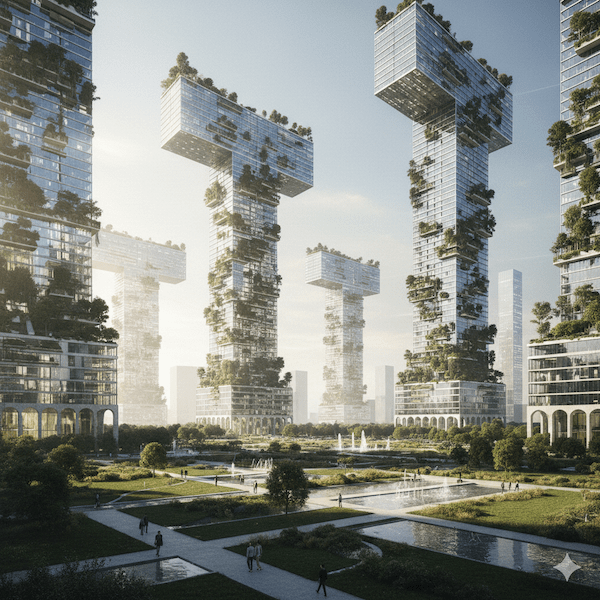
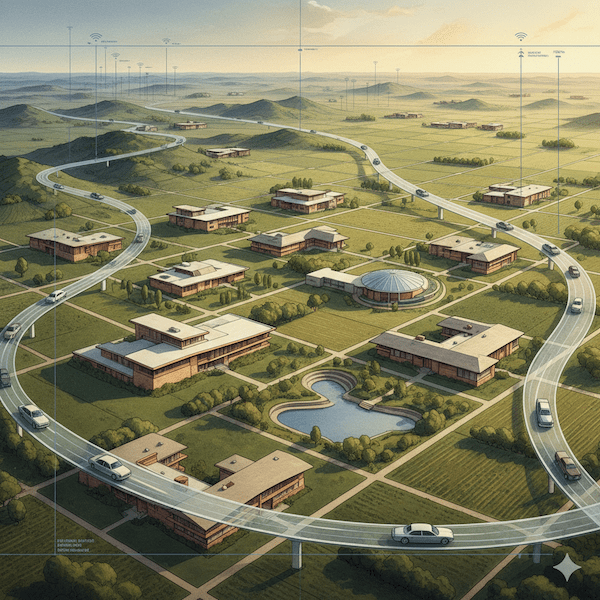
The 14th-century historian Ibn Khaldun offered this insight into the formation of cities in his book, "Discourse on the History of the City." Looking back at the cities we live in today, with their grid-like, straight roads, open, glass-walled skyscrapers, and sprawling suburbs predicated on the personal car, these were symbols of 20th-century "progress," but at the same time, they are beginning to reveal their vulnerability to new "horrific threats" such as extreme heat caused by climate change, soaring energy costs, and the weakening of communities.
There is an ancient model that is currently drawing the attention of urban planners and architects around the world. It is the old city that developed in the Islamic world."Medina"is.
This urban structure, which at first glance appears to be a disorderly and chaotic maze, is embedded with an astonishing "rational algorithm" that controls the harsh desert climate and balances community ties with individual dignity (privacy). In this paper, we thoroughly dissect the urban structure of the medina from architectural and sociological perspectives, and consider, with detailed data, the "Winter Medina" concept, which applies its essence to urban development in Toyako Town, Hokkaido, a cold region.
1. The Logical Structure of a Labyrinth: Why Do Paths Wind?
First, I would like to share with readers the fact that the concept of "road" in Medina is fundamentally different from that of modern Japan. In modern urban planning, roads are designed as "lines for traveling from point A to point B in the shortest time." However, in Medina, streets are more than just "spaces for movement"; they function as "environmental control devices" and "social filters."
(1) Mazes as climate control devices
Why are the roads in Medina so narrow and winding? The main reason is to adapt to the harsh desert climate. By completely eliminating straight lines and narrowing the street width, the city enjoys the following physical benefits:
-
● Shading effect: blocking sunlight and reducing temperature
Narrow streets (2-3m wide) have buildings on either side casting shadows on each other, minimizing the time it takes for direct sunlight to reach the road surface. Data shows that at midday in summer, there is a difference of more than 10°C in ground surface temperature between wide streets and the alleys inside the Medina. -
● Physical protection from sandstorms and hot winds
Straight roads act as wind tunnels, drawing sandstorms deep into the city, while the deliberately curved, maze-like streets act as hydrodynamic resistance, damping the force of strong winds and acting as buffer zones to prevent sand from entering.
(2) Layered security through "cul-de-sac"
Next, let's look at its social function. The Medina's street network is clearly designed with a gradation from "public" to "private." At the heart of this is the "cul-de-sac."
[Conceptual diagram] Spatial hierarchical structure and access rights in Medina
(Main Street)
(Distributor)
(Cul-de-sac)
*The further you go, the more difficult it becomes for outsiders to invade.
As the diagram above shows, in the Medina, open roads branch out into dead-end streets. These dead-end streets are "semi-private spaces" shared by the several families who live there, and any outsiders who enter are immediately perceived as suspicious. This creates an autonomous crime prevention system in which public order is maintained through mutual surveillance within the community, without relying on police power.
2. The microcosm of a courtyard house
If the streets are a "space of refusal," then the interior of a home is its polar opposite. The basic architectural unit that makes up the Medina is the "courtyard house," which is the physical embodiment of the Islamic concept of "halim (inviolable sanctuary)."
The Mechanism of Introverted Architecture
The defining feature of these houses is that they are thoroughly introverted. The exterior walls facing the street have almost no openings, except for small windows for ventilation. Instead, large windows and corridors open onto the courtyard (patio) at the center of the building.
This structure has some very reasonable features:
| Comparison items | [A] Medina courtyard house | [B] Traditional Japanese townhouse |
|---|---|---|
| Eye Control | Complete shutdown From the outside, only the walls are visible, completely eliminating any signs of life. |
Gradual shutdown The atmosphere and light from inside leak out onto the street through the lattice. |
| Ventilation and lighting | Gravity ventilation (stack effect) Cool air is stored in the courtyard at night and used during the day. |
horizontal ventilation The wind flows horizontally through the passageway to remove humidity. |
| structural density | Agglomeration Neighboring houses share walls, and the entire city becomes one giant building. |
Independent/tenement structure There are gaps and back alleys for fire prevention. |
| environmental background | Dry and high temperature (low humidity) Evaporative cooling is effective. |
High temperature and humidity If ventilation is not provided, mold and decay can occur. |
Of particular note is the "thermal environment control." Medina houses are made of stone and brick (materials with high thermal capacity), which stores heat in the walls during the day and collects air cooled by radiative cooling at night at the bottom of the courtyard. Even if the outside temperature rises the next morning, the pool of cool air in the courtyard keeps the entire house cool. This can be said to be the ultimate passive cooling system that does not require air conditioning.
3. Modern application: The "Winter Medina" concept in Hokkaido
The Medina wisdom we've seen so far has been an optimal solution for the dry desert. However, by reversing this logic and combining it with modern technology, the potential for a "Winter Medina" to be applied to solving problems in the snowy country of Hokkaido emerges.
Hokkaido, and especially tourist destinations like Toyako Town, face challenges such as a decline in visitors in winter, huge snow removal costs, and increased energy consumption. The key to solving these problems lies in the high density and closed nature of the Medina area.
The biggest factor that takes away the perceived temperature in Hokkaido winters is wind. Current Japanese urban planning requires buildings to be spaced apart (setbacks), but in cold regions this simply creates a path for the cold wind to pass through.
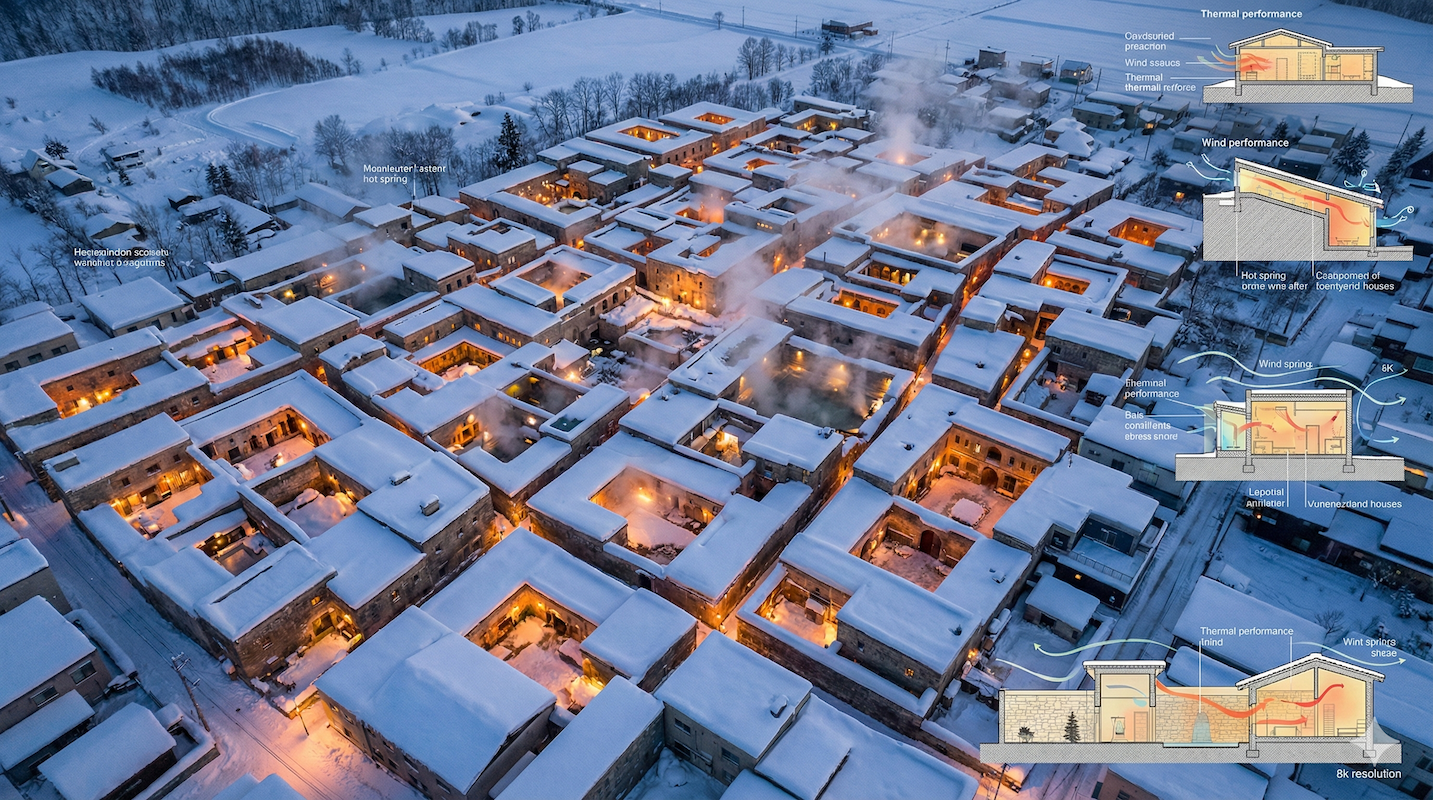
Therefore, like the Medina, we adopted a plan that connects the buildings without any gaps and closes the perimeter with a strong wall. This physically blocks the intrusion of ground snowstorms into the residential area. The courtyard space formed inside this "windbreak wall" creates a mild microclimate that is not affected by the wind, and can function as a place for children to play in winter or as a safe space to remove snow.
In regional cities experiencing depopulation, the "sponge effect" of scattered housing structures is putting pressure on administrative costs, such as increasing the distance required for snow removal and the risk of frozen water pipes.
Reorganizing these areas into high-density residential areas like medinas makes a lot of economic sense. Collective structures, with neighboring houses sharing walls, dramatically reduce heat loss from buildings. Reducing the surface area exposed to the outside air (envelope area) increases heating efficiency, directly leading to lower utility bills for each household. It also minimizes the length of roads that require snow removal.
Towards a walkable "immersive winter tourist destination"
Furthermore, there are also significant benefits from the perspective of tourism strategy. Currently, Toyako Onsen Town has wide roads and cold winds blowing through in winter, making it difficult for tourists to stroll around in yukata. As a result, guests end up staying confined to their hotels.
Here, we will introduce "gangi" (gangi) and underground passageways, as well as "Sabat"-style spaces where buildings connect on the upper floors to form an arcade, creating a dense network of alleyways. The experience of wandering around a maze-like shopping street enveloped in warm lighting, unfazed by snow or wind, will provide an "immersion into the extraordinary" that is not found in modern tower hotels, and could be a powerful killer content that will attract inbound tourists.
[Estimation] Urban density and administrative costs per capita (snow removal and road maintenance)
*Conceptual calculation of cost reduction effects due to reduced road area ratio and improved thermal efficiency
Conclusion: Rediscovering the hidden richness in "inconvenience"
From a modern perspective based on a car-oriented society, the urban structure of the Medina may seem like a symbol of inconvenience, with cars being inaccessible and it easy to get lost. However, we are beginning to realize that this inconvenience is in fact the strongest barrier (shield) that protected the community on a human scale and allowed it to survive in a harsh natural environment.
From the sprawling suburban lifestyle of endless expansion to a denser lifestyle where people share walls and huddle shoulder to shoulder. The potential of Toyako Town's "Winter Medina" is not simply an imitation of an exotic architectural style. It is a challenge to next-generation sustainability, where we "coexist" with the harsh natural environment rather than fighting it, wasting energy and rebuilding a sense of distance where we can feel each other's warmth.
What lies at the end of the maze is not a dead end. It may be a true "place of peace" that we have left behind in the process of modernization.
Related Links
- Ministry of Land, Infrastructure, Transport and Tourism: Towards the creation of compact cities
- UNESCO World Heritage Center – Medina of Fez
- Hokkaido Prefectural Government: Hokkaido City Planning Data
Inquiries and requests
We help solve local issues.
Please feel free to contact us even if it is a small matter.