〜The current state of urban development in Japan that goes beyond preserving buildings and connects people's lives to the future〜
*This article is based on information as of February 2026.
Winston Churchill, a British politician who led the country during World War II, once made the highly suggestive statement during a parliamentary session discussing the rebuilding of the Houses of Commons, which had been destroyed in the war: "We shape our buildings; thereafter they shape us." The premise is that urban space is not simply a collection of physical structures. It interacts with and determines the spirituality and social structure of the people who live there, while at the same time being determined by them.
Contemporary urban planning and community development is undergoing a full-scale paradigm shift from the development-first approach based on the modern "scrap-and-build" approach to the "preservation and enhancement of historical landscapes," which reevaluates the region's unique historical and cultural stock as a resource and passes it on to future generations. To conclude, this trend toward preserving historic streetscapes is by no means a mere nostalgic glorification of the past. It is a strategic approach aimed at rebuilding urban identity in a society with a declining population and establishing a sustainable local economy. Deeper considerations reveal a multifaceted significance: a desperate local defense against the homogenization of space brought about by globalization. This section provides a comprehensive and detailed explanation of the fundamental definition of this concept, its historical background in Japanese community development, the structural differences between similar laws and regulations, and the current challenges facing contemporary society.
1. What is Historic Landscape?: Background and Transition of the Paradigm Shift
Integrated management of hard (space) and soft (activity) aspects
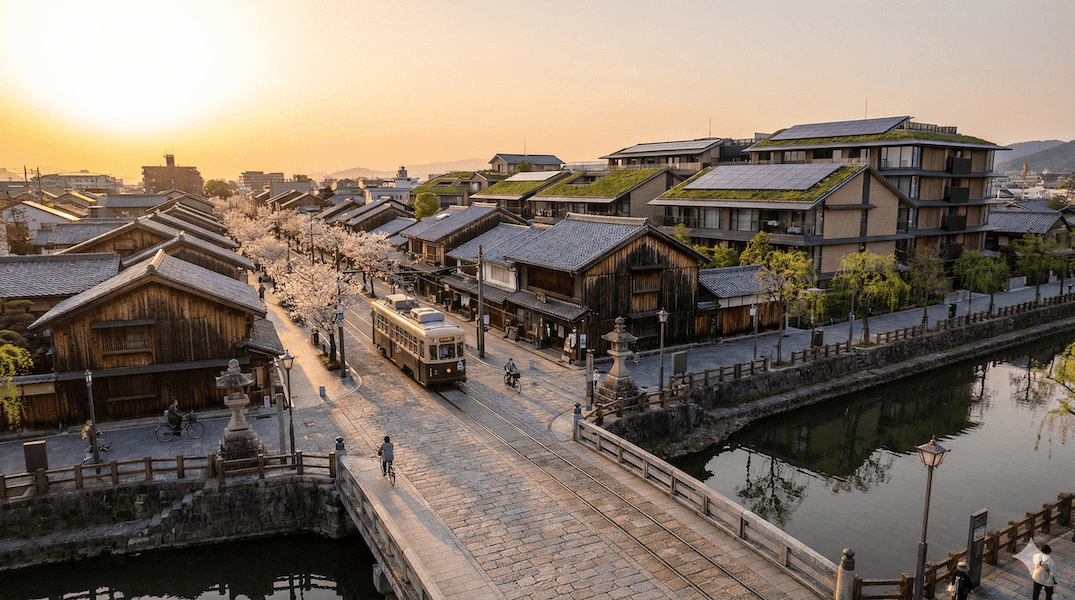
The first thing we need to clarify is the definition of historical landscape. In conclusion, preserving historical landscape is defined as "not just preserving the 'tangible' things (hardware) such as old buildings, but also the 'tangible' things (software) such as the traditional events and livelihoods of the people who live there, and protecting the unique historical scenery and atmosphere of the area as a whole, and nurturing it for the future."
Even within a legal framework, historical landscape does not simply refer to the state in which past buildings remain. According to the definition in the "Act on the Maintenance and Improvement of Historic Landscape in Local Areas (Historic Urban Development Act)," it refers to the very image of a good urban environment formed by the inseparable connection between historically significant buildings (castles, shrines, temples, townhouses, etc.) in a local area and the social activities that have been passed down through the generations, such as traditional festivals, industries, and everyday activities of people, which have taken place within those spaces. In other words, the essence of "maintaining historical landscape" lies in sophisticated urban policies that comprehensively manage the space as a vessel, the time that flows within it, and the memories of people.
Evolution from isolated conservation movements to comprehensive conservation
Tracing the chronological origins of Japan's historic townscape preservation, we can trace it back to the Ancient Capitals Preservation Law, enacted in 1966 in response to a strong sense of crisis over the destruction of historic landscapes one after another due to rapid urban development during the period of high economic growth. Subsequently, in the 1970s, a resident-led preservation movement, symbolized by the three principles of "not selling, not renting, and not demolishing," gained momentum in places such as Tsumago-juku in Nagano Prefecture.
This resident-led preservation movement in Tsumago-juku was highly praised as a pioneering example of a local community taking the initiative to protect its landscape. This movement significantly boosted the formative trend in preservation administration from the mid-1970s onwards, and was one of the key catalysts that led to the creation of the "Preservation Districts for Groups of Traditional Buildings" system through the 1975 amendment to the "Act for the Protection of Cultural Properties." However, for a long time, preservation administration in Japan was dominated by the approach of preserving specific buildings of high historical value or limited areas as "points" or "lines." This was insufficient to address the broader urban development that affected the entire city, and so on December 17, 2004, the "Landscape Act," Japan's first comprehensive protection of the landscape itself, came into effect.
Furthermore, on November 4, 2008, the Act on the Maintenance and Improvement of Historic Landscape in Local Areas (commonly known as the Historic Town Development Act) came into effect, marking the full-scale launch of a comprehensive approach that integrates physical historical assets with the living activities of people.
A historic milestone marking a phase transition
As a concrete example of this collaboration, the 2nd Chubu Historical Town Planning Summit was held in the Chubu region on October 17, 2013. This summit was attended by seven cities and towns that are pioneering historical town planning: Takayama City, Kameyama City, Inuyama City, Ena City, Mino City, Meiwa Town, and Gifu City.
What is particularly noteworthy here is that these local governments have concluded an agreement (memorandum of understanding) to not only share know-how for promoting tourism and cooperate in public relations and advertising, but have also decided to create a strong network for mutual support in recovery efforts in the event of a disaster. This event is extremely groundbreaking in that it raises the composite themes of "maintaining the historical landscape" and "urban development that balances tourism and disaster prevention," and can be considered a historic milestone that clearly indicates a shift in the phase of institutional operation from isolated preservation movements by individual local governments to sustainable urban management through a wide-area network.
2. Structural comparison with similar laws and regulations and international perspectives
In order to objectively evaluate the effectiveness of policies for preserving historical landscapes and the accompanying financial impact, it is essential to conduct international macro-level comparisons and micro-level institutional comparisons with similar laws and regulations existing domestically. This section will structurally organize these comparisons and highlight the characteristics of each.
Structural Issues in Private Property Rights and Funding (Comparison of Japan and Other Countries)
As a premise, regarding the preservation of historic streetscapes, there is currently no uniform comparative data available regarding specific numerical data such as the difference in the specific amount of national budget allocated to preservation between Japan and other countries (e.g., New York, Paris, London, etc.), a clear comparison of the economic effects of tax incentives, or the percentage of adoption of specific systems in each country (no data).
However, it is entirely possible to consider the structural differences that underlie this. Specifically, we can see that overseas countries have strong institutional support for preservation. For example, France has tax incentives such as the "Malraux System," which grants tax deductions for the restoration of historic buildings. The UK also has a strong licensing system called the "Listed Building Consent," which makes unauthorized alterations to historic buildings subject to criminal penalties.
In contrast, Japan has an extremely strong legal foundation for the protection of private property rights under its constitution. In addition, the majority of traditional Japanese buildings are constructed of wood, which means they are prone to rapid deterioration over time due to fire risk and climatic factors, and are structurally characterized by the tendency for running costs for maintenance and repair to skyrocket compared to European stone buildings. Therefore, there are limits to relying solely on public subsidies in Japan, and as a result, there is a growing reliance on fundraising through market mechanisms, such as the formation of urban development funds and investment by private businesses, known as "adaptive reuse."
Division of roles and clear differences between the three domestic laws
There are three main legal frameworks for preserving historical townscapes and landscapes in Japan: the Historic Town Planning Act, the Landscape Act, and the Cultural Properties Protection Act. Although these have different objectives and regulatory approaches, they are applied in a multi-layered manner in actual urban planning, making them an area that is generally very easy to confuse. The table and conceptual graph below outline the division of roles and clear differences between each law.
| Comparison element | Historical Town Development Act (Historic Landscape Maintenance and Improvement Act) |
Landscape Act | Cultural Properties Protection Act (Preservation districts for groups of traditional buildings, etc.) |
|---|---|---|---|
| Main purpose and theme | Maintaining and improving both historical "buildings (hardware)" and the region's unique "people's activities, traditions and livelihoods (software)" in an integrated manner. | Creating a good "landscape." The focus is on visual design and harmony, and historical requirements are not necessarily required. | Preserving "cultural assets themselves" that are of great historical, artistic, and academic value, and ensuring their safe passage to future generations. |
| Perception of the subject and space | The aim is to develop a "surface" town through the fusion of hard and soft aspects, and to understand the entire living space of residents in a historical context. | Control of the visually recognizable "surface" or "wide area" of a city, such as the form, color, height, and design of buildings. | Protection of specific buildings (points) and historic urban areas (areas) that are of high value. |
| The balance between regulation and support | The focus is on special support measures (subsidies and special exceptions) from the government based on approved plans. The character of the measures is more "promotion and support" than "regulation." | Based on the landscape plans of local governments, they can notify, recommend, and order changes to construction activities, etc. They have a moderate level of "regulatory power" based on city plans. | In areas where traditional buildings are preserved, a framework is in place to permit changes to the status quo based on preservation ordinances, and repairs and landscaping are carried out under permit standards. |
| Major ministries and agencies involved | This is an unusual joint project between the Ministry of Land, Infrastructure, Transport and Tourism, the Ministry of Education, Culture, Sports, Science and Technology, and the Ministry of Agriculture, Forestry and Fisheries, and is based on a comprehensive administrative approach. | Ministry of Land, Infrastructure, Transport and Tourism. It is mainly used as part of urban planning and social capital development. | Ministry of Education, Culture, Sports, Science and Technology (Agency for Cultural Affairs): National conservation policy based on academic and cultural approaches. |
[Conceptual graph] Comparison of the characteristics of landscape and historic preservation laws (differences in scope and regulatory methods)
(Focus on support and promotion)
(Notifications, Recommendations, etc.)
(Regulations through licensing systems, etc.)
*This graph is a conceptual diagram showing the breadth of application of each law and the differences in the direction of regulatory approaches.
As mentioned above, the Cultural Properties Protection Act aims to "ensure the protection of high-value and limited aspects through a framework such as a permit system," and the Landscape Act aims to "control design over a wide area," whereas the Historic Town Planning Act combines these two and clearly shows its structure as a tool for comprehensive urban management that also encompasses the "activities (software) of the people who live there."
3. Trade-off between preservation and utilization: Challenges and conflicts faced
The shift to urban development centered on preserving traditional streetscapes brings about dramatic changes in local communities. While this has clear benefits for the government and business operators promoting it, it also creates significant disadvantages and friction for the residents who actually live in the area and for capital seeking new development. In order to design a structure that creates a win-win for both parties in the ecosystem, it is necessary to accurately understand these pros and cons.
Wide-area networking of tourism resources and dramatic improvement of brand value:
Historic townscapes themselves are extremely powerful tourism resources. As the example of seven cities and towns, including Takayama and Inuyama, at the 2013 Chubu Historic Town Development Summit showed, by signing agreements and forming networks among cities with historical landscapes, it becomes possible to share know-how on promoting tourism. This will allow scattered tourist destinations to evolve into a wide-area tourist route, dramatically improving the region's ability to attract visitors, increase stay times, and boost its economic impact.
Realizing resilient urban development that balances historical preservation and strengthening disaster prevention functions:
The preservation of old traditional buildings is often seen as a weakness in terms of disaster prevention, but under modern systems, it is carried out in conjunction with infrastructure development (road widening, removing utility poles, earthquake-resistant renovations, etc.). By establishing a framework for mutual support in recovery efforts in the event of a disaster, as the seven central cities and towns have done, it is possible to go beyond simply beautifying the landscape and create a highly resilient and sustainable urban infrastructure.
Revitalizing local communities and fostering civic pride:
Supporting not only the hard aspects of old townscapes but also the "soft" aspects such as traditional festivals, artisanal techniques, and local industries that are linked to them provides an opportunity for residents to rediscover the historical value of their area. Fostering this civic pride will ultimately prevent the outflow of permanent residents and will be the most powerful driving force for creating a related population from outside the area.
Obstruction to large-scale development by foreign capital, etc., and restrictions on property rights due to strict regulations:
In order to maintain the landscape and historical atmosphere, it is necessary to impose strict restrictions on the height, design, color, and use of buildings. For landowners and real estate developers hoping to reap economic benefits from intensive land use, these restrictions are seen as a serious obstacle to the exercise of property rights, and can cause intense conflict within the community.
Overtourism and deterioration of living conditions due to branding such as World Heritage registration:
If the landscape is preserved and the area is branded, it is expected that a vastly larger number of tourists will flock to the area than expected. This will result in external diseconomies such as traffic congestion, illegal parking, noise, and littering, which will significantly worsen the quality of life (QOL) of local residents. There is always a risk that protecting the landscape will result in residents being unable to live in the area, which is a completely counterproductive situation.
Huge maintenance cost overruns and a shortage of traditional craftsmen:
Compared to modern architecture, maintaining and repairing buildings that use traditional construction methods and natural materials while ensuring they comply with landscape standards is extremely costly (no data available on specific average overage costs or percentages). In addition, the number of craftsmen with traditional skills, such as shrine carpenters and plasterers, is declining significantly, creating physical constraints that make it difficult to commission repairs even if funds are available.
4. Local Practices and Potential: A Landscape-Wide Approach
Discussions regarding the preservation of historical landscapes and scenery depend heavily on the specific geographical conditions, economic base, and historical context of each area. Here, we will provide a detailed analysis of the focus of discussions and the forefront of landscape administration in a specific area of Hokkaido, particularly Toyako Town, where vast natural landscapes and the tourism industry are closely linked.
Landscape control as a key element in regional defense against foreign capital inflows
In Toyako Town, control of the "entire landscape" in harmony with the overwhelming natural environment functions as the key to regional defense, going beyond the context of "preserving an old post town" as seen in urban areas.
What can be confirmed is that, as has been evident in major tourist destinations in Hokkaido in recent years (such as the Niseko region), Toyako Town is also facing a real threat from the influx of foreign capital leading to large-scale resort development and land acquisition. Toyako Town's landscape planning documents also clearly state that there is a strong sense of crisis behind this, stating that "there are concerns that development by foreign capital will impair the unique landscape of Lake Toya." Unregulated development left to the free market has the potential to produce gigantic buildings that ignore the historical and natural context of the region, and this is the biggest reason why the creation of strong rules based on the Landscape Act is urgently needed.
Transition to a "Landscape Administrative Organization" and Management after World Heritage Registration
Another noteworthy development is that Toyako Town's Irie and Takasago Shell Mounds were registered as a World Heritage Site in 2021 as part of the "Jomon Sites of Hokkaido and Northern Tohoku." Anticipating an increase in visitors from both within Japan and abroad following this World Heritage listing, landscape management has become even more important as a "proactive" measure to prevent uncontrolled development and environmental destruction.
To counter this wave of foreign development and tourist destination development, Toyako Town was transferred authority formerly held by Hokkaido on April 1, 2021, in accordance with the Landscape Act, and became a "Landscape Administrative Body." In June of the same year, Toyako Town formulated its own "Toyako Town Landscape Plan." This has enabled the town, which is part of a special national park, to develop its own unique, detailed and effective landscape administration tailored to its own unique characteristics, rather than relying on the uniform and loose standards of regional municipalities. The exercise of local regulatory power at the local municipal level serves as a practical defense shield to protect the region's landscape from the tide of global capital.
*As a supplementary note, we were unable to find any specific data on the "estimated increase or decrease in tax revenue effects" that will be brought about in the future by the formulation of landscape plans and the transition to landscape administrative organizations, or on the "estimated economic losses caused by restrictions on foreign development and the economic ripple effects from branding." This is thought to be due to the structural background that makes it extremely difficult to accurately quantify the positive and negative economic effects of restrictions in areas that are primarily based on natural landscapes.
Conclusion: Who bears the cost of the trade-off between preserving and developing the landscape, which is a shared asset (commons)?
The shift to preserving historical landscapes and traditional streetscapes is no longer a cultural initiative for nostalgic relics of the past. It is a powerful antithesis to urban spaces that are rapidly becoming homogenized due to globalization, and a very modern survival strategy that allows regions to redefine their own identities and seek economic, social, and environmental sustainability.
Looking ahead, it is predicted that landscape urban development in Japan will sharpen along two vectors. First, as shown by the examples of seven cities and towns in the central region, there will be an acceleration of wide-area collaboration and networking. In regional cities facing population decline and financial difficulties, the preservation costs borne by individual municipalities have already reached their limits, making the creation of alliances covering everything from tourism promotion to disaster prevention and sharing of dwindling craftsmen a prerequisite for maintaining the system. Second, as shown by the example of Toyako Town, there will be a strengthening of local legal regulations and defensive functions. To protect local landscapes from global capital, local governments will proactively delegate authority and strengthen their control through stricter, more unique ordinances.
In summarizing this article, the main point I would like to present to readers is the "structural imbalance in cost burden." The beautiful cityscapes and magnificent natural landscapes that we enjoy in tourist destinations are by no means maintained spontaneously. They are maintained through invisible sacrifices, such as the residents' adherence to strict building regulations, the personal burden of enormous maintenance costs, and restrictions on property rights due to intensive land use.
How can we correct this structural imbalance that exists between those who temporarily "consume" traditional townscapes (tourists and outside businesses) and those who "maintain" them on a daily basis (local residents and government)? It is not enough to understand the superficial frameworks of systems such as the Landscape Act and the Historic Town Development Act; we, as users, must consider how we ourselves should bear the costs (for example, by paying back accommodation taxes or entrance fees) in order to sustainably protect the unique culture and lifestyles of the region, and how we can practice responsible, sustainable tourism that is a win-win for the entire ecosystem. Rather than simply being bystanders, each individual must now reexamine the nature of urban development with a sense of ownership.
Related Links
- Ministry of Land, Infrastructure, Transport and Tourism: Status of certification of historic landscape maintenance and improvement plans
- Agency for Cultural Affairs: Preservation Districts for Groups of Traditional Buildings
- Ministry of Land, Infrastructure, Transport and Tourism: Landscape Urban Development
Inquiries and requests
We help solve local issues.
Please feel free to contact us even if it is a small matter.