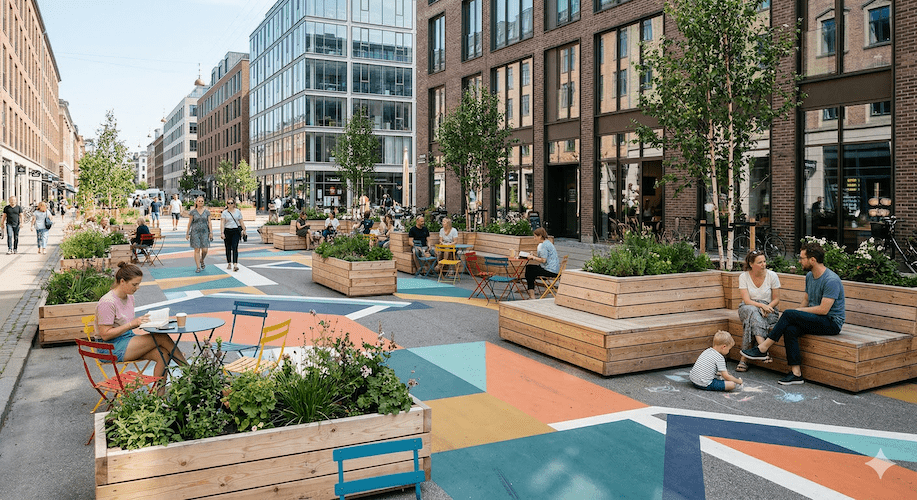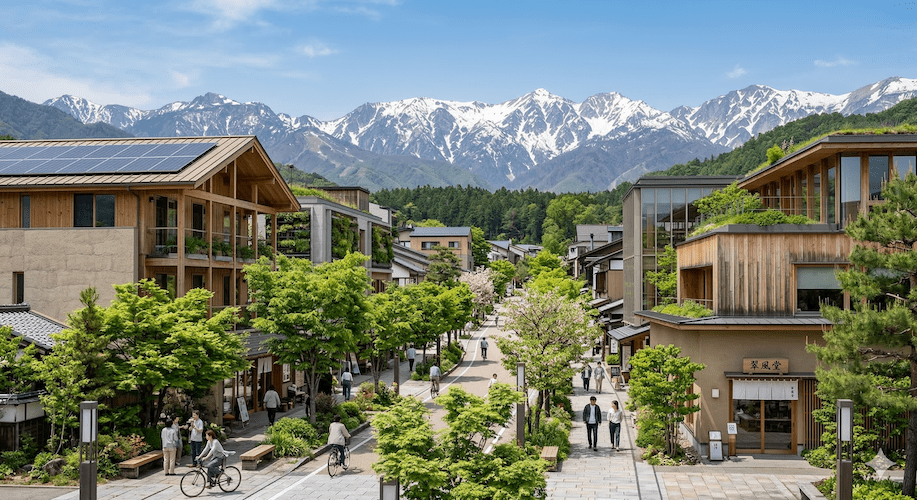
〜Clear differences from the City Planning Act, historical background, and advantages and disadvantages of its introduction.〜
*This article is based on information as of March 2026.
To begin with, whose property is the "beauty" of the cities in which we live our daily lives and conduct our businesses? Former British Prime Minister Winston Churchill once made the following profoundly insightful statement during a debate on rebuilding the House of Commons on October 28, 1943.
"We shape our buildings, and afterwards, our buildings shape us."
As this statement suggests, the spatial composition and quality of a city's landscape are not merely visual decorations or fleeting trends. They are powerful factors that directly reflect the mentality of the people who live there, the maturity of society as a whole, and even shape the values of future generations.
However, looking at the history of urban development in modern Japan, we see that for a long time, economic rationality, the pursuit of short-term profits, or functional requirements related to disaster prevention and sanitation have been given top priority. As a result, it cannot be denied that there has been an unconscious sacrifice of "landscape," an irreversible shared asset that is difficult to recover once destroyed. Giant outdoor advertisements using primary colors stand in a haphazard manner, commercial buildings with bizarre colors stand out completely from the rich natural environment around them, or high-rise apartment buildings cruelly divide the skyline of historical cityscapes that have been formed over hundreds of years. Japanese cities and tourist destinations have been exposed to waves of uncontrolled development in a state of "lack of comprehensive rules," so to speak, because there has been a weak nationwide basic legal framework that comprehensively deals with the landscape itself.
The Landscape Act, enacted in 2004, is a national fundamental rule designed to legally curb such situations and realize unique and beautiful urban development rooted in the distinctive characteristics of each region (climate, history, and culture). This article explains everything from the basic operational protocols of the Landscape Act to its structural and precise differences from the Urban Planning Act, which is often confused with it in practice, the trade-offs between the benefits and drawbacks of introducing regulations, and the lessons learned from past historical court cases. Furthermore, we will delve deeply into the next generation of "minimalist landscape management," using the harmony between the overwhelming natural environment and development in Toyako Town, Hokkaido, as a model case, based on facts and from multiple perspectives.
1. What is the Landscape Act? Controlling "aesthetics" within the framework of urban planning.
The precise relationship between the "City Planning Act," which defines the hard aspects, and the "Landscape Act," which designs the soft aspects.
In short, the Landscape Act is defined as "a basic framework for legally and clearly positioning good landscapes in Japan's urban spaces and rural areas as common national assets, and for comprehensively promoting their preservation and formation." In practice, however, it is often confused with the City Planning Act. While it is helpful to understand these two laws as different "layers" in shaping urban spaces, they are not completely separate in terms of strict legal classification.
Broadly speaking, the City Planning Act is a law primarily for quantitatively controlling "three-dimensional volume and function (hard aspects)" such as land use (zoning, whether it's residential, commercial, or industrial), building floor area ratio, and building coverage ratio. However, this alone would lead to the logic that "as long as it's within the prescribed size and height limits, you're free to paint the exterior walls neon colors or make the window shapes eccentric." As a result, there are concerns that this will lead to the creation of what is known as "fast-foodization," where the same bland chain stores and homogenized buildings line the streets everywhere in the country.
On the other hand, the Landscape Act addresses "visual and aesthetic elements (soft design aspects)" such as the color of buildings (strict specifications using Munsell values, etc.), form and design (design direction), maximum height limits, materials used, and even the state of greening within the site. In other words, it is generally explained that "the Landscape Act provides the design details on top of the framework of the City Planning Act."
However, it's important to note from a legal standpoint that these two systems are not completely separate as "hardware and software." The City Planning Act includes zoning districts (such as scenic districts) aimed at "forming a good landscape," and conversely, the Landscape Act has a powerful system called "landscape districts," where it's possible to impose extremely hard restrictions, such as not only the form and design of buildings, but also the maximum and minimum height limits for buildings, restrictions on the location of walls, and minimum lot sizes. In other words, the two laws complement each other, controlling the urban landscape in a multi-layered way.
| Comparison items | Landscape Act | City Planning Act |
|---|---|---|
| The fundamental purpose of law | Its primary objectives are to create a pleasant landscape, protect the beauty of the city, and preserve its local character and history. | Its primary objectives are the healthy development of cities, orderly land use, and efficient infrastructure development. |
| The main targets of regulatory intervention | Primarily, the building's "form, design, color, materials, appearance, and greening ratio." *In scenic areas, height is also included. | Land "use," building "floor area ratio, building coverage ratio, absolute height restrictions," etc. |
| Approach | Emphasis is placed on controlling the visual and qualitative aspects of "beauty and harmony with the surrounding environment." | Emphasis is placed on absolute limitations on numerical and quantitative "volume, function, and population density." |
| Main scope of application/designation | Landscape planning areas (not limited to urban planning areas, but can also be broadly designated in natural areas such as agricultural, mountain, and fishing villages and national parks) | Urban planning areas (urbanization promotion areas, urbanization control areas, unzoned areas) and quasi-urban planning areas |
2. Historical changes and the current situation: Why are local governments using the Landscape Act as a weapon now?
"Lack of comprehensive rules" and the history of local government struggles
Before the enactment of the Landscape Act, it wasn't that there were absolutely no mechanisms in Japan to protect the landscape. Systems related to landscapes existed, such as height restriction zones, scenic zones, district plans, and local government ordinances. However, the core of the problem lies in the fact that "there was a weak, comprehensive, nationwide basic legal framework that addressed the landscape itself."
From the period of rapid economic growth through to the bubble economy, the pursuit of development profits was paramount, leading to the demolition of historical buildings and resort development that disregarded natural ridgelines, all on a nationwide scale. Local governments on the ground felt a strong sense of crisis in response to this. For example, in 1993, Manazuru Town in Kanagawa Prefecture enacted and implemented a town development ordinance that established a groundbreaking design code called "Standards of Beauty." This pioneering attempt treated the entire town as a single building, meticulously regulating things like the shape and color of roofs and the preservation of stone walls, and it is still known as a successful example that has been in operation for over 30 years.
Manazuru Town in Kanagawa Prefecture is known for its unique "standards of beauty" and is recognized as a pioneering municipality in landscape preservation.
However, the landscape ordinances that local governments could enact at the time had a critical weakness: they lacked the legal force to override higher laws (such as the Building Standards Act). If a developer attempted to construct an unconventional apartment building in defiance of the ordinance's standards, the government could only request a change in plans through "requests (administrative guidance)," and it was difficult to legally refuse to grant building permits.
As a result, serious legal disputes have frequently occurred in which residents/government officials and developers are in direct conflict, such as the "Kunitachi Apartment Lawsuit" in Kunitachi City, Tokyo, and the "Kyoto Hotel High-Rise Project Problem" in Kyoto City.
The "National Apartment Lawsuit" in particular holds historical significance. In a 2006 Supreme Court ruling, it was clearly recognized that the right of nearby residents to enjoy the benefits of a good view, i.e., the "view interest," is worthy of legal protection. However, in this specific case, the court ruled that the construction plan did not violate administrative laws and regulations at the time, and that it could not be considered an illegal infringement of the view that exceeded the limits of what is socially acceptable. Therefore, the claim for demolition of the building was not granted. In other words, while the concept of the right was recognized, it did not lead to effective relief.
Furthermore, the "Kyoto Hotel High-Rise Project" reignited the debate over the historical landscape with a plan to rebuild the hotel to a height of 60 meters. Along with the later controversy surrounding the construction of the Kyoto Station building, this created a strong sense of crisis and distrust of the government among citizens. These events became a major social movement demanding a fundamental shift in landscape policy.
The enactment of the Landscape Act in 2004 and the overwhelming penetration rate shown by the data.
To fundamentally resolve this situation and provide local governments with a strong legal basis (weapon), the "Landscape Act," Japan's first comprehensive landscape legislation, was promulgated on June 18, 2004. After partial implementation on December 17 of the same year, it was fully implemented on June 1, 2005. With the birth of this law, local governments that meet certain requirements can become "landscape administrative bodies" and formulate effective "landscape plans."
Currently, this system is deeply ingrained throughout Japan. According to the latest data as of March 31, 2025, published by the Ministry of Land, Infrastructure, Transport and Tourism, there are currently 822 organizations nationwide that are designated as landscape administration bodies. Considering that the total number of cities, towns, and villages in Japan is just over 1,700, this means that roughly half of all local governments have acquired the authority to proactively protect their landscapes.
[Graph] Breakdown of Landscape Administration Organizations (822 organizations nationwide)
*Based on data published by the Ministry of Land, Infrastructure, Transport and Tourism (as of March 31, 2025)
What is even more noteworthy is the fact that 675 of these organizations have already formulated their own specific "landscape plans" that define concrete regulatory standards. This means that these are not merely slogans, but are being implemented as effective rules.
On the other hand, when we look at the "District Plan and Other Form Design Ordinances," which strictly regulate designs at a more micro, district-level, we see an interesting bias. While these ordinances have been introduced in 136 districts across 22 municipalities nationwide, their use is limited in regional cities such as Shiwa Town in Iwate Prefecture (1 district) and Chiyoda Town in Gunma Prefecture (2 districts). In contrast, they are being used intensively in areas of the Tokyo metropolitan area facing overwhelming development pressure, such as Fuchu City in Tokyo (11 districts), Yokohama City in Kanagawa Prefecture (27 districts), and Kawasaki City in Kanagawa Prefecture (16 districts), as a powerful means of defense to protect the living environment of residents and the landscape of specific city blocks.
3. The Light and Shadow of Landscape-Based Urban Development: The High-Level Trade-Offs Brought About by Regulations
While urban development utilizing landscape laws brings significant benefits to local communities, it also involves strong trade-offs such as economic and time costs and restrictions on rights. This article contrasts the perspectives of the government and businesses promoting such development with those affected by the regulations and those opposed, to clarify the fundamental dilemma involved.
(Preserving value and maximizing medium- to long-term ROI)
① Deterring disorderly development based on legal grounds:
The greatest strength of the Landscape Act lies in its clear legal process. Construction activities within landscape planning areas are required to be notified in advance, and the government can issue "recommendations" if the standards are not met. Furthermore, it is possible to issue legal "modification orders" regarding restrictions on the form and design of specific notification-subject activities. In addition, in areas designated as "landscape districts," which have stronger regulations, a system for certifying the form and design of buildings and height restrictions are in place, and construction cannot be carried out unless these are met, thus ensuring the protection of the landscape, which is a shared asset of the region.
② Improving real estate value through the establishment of a regional brand:
A beautiful, unified cityscape generates a huge economic ripple effect known as "landscape externality." While landscape preservation may temporarily limit development profits, in the medium to long term it contributes to raising land and real estate values throughout the region, resulting in strong returns (increased tax revenue and economic benefits) such as attracting top companies and a continuous influx of tourists.
③ Fostering civic pride:
In the planning process, through public hearings and resident participation workshops, residents themselves redefine the value of their local history and culture. Rules established through consensus building, rather than a top-down approach from the government, encourage residents to proactively maintain and manage their town, forming a foundation for strong community development.
(The friction between economic costs and restrictions on rights)
① Increasing construction and development costs and prolonged project duration:
When constructing a new building within a designated landscape planning area or landscape district, strict design standards must be met, including adherence to specific color restrictions and achievement of greening ratios. This means that inexpensive, mass-produced building materials cannot be used, and there is a risk of a significant increase in initial costs. Furthermore, procedures such as prior notification and meetings with landscape councils can delay the construction period by several months, putting pressure on finances.
② Strong intervention in private property rights and the "subjectivity of beauty":
A fundamental friction arises when the constitutionally guaranteed property right to "build a house of your choice on your own land" is restricted in the name of "harmony with the surroundings." Unlike objective figures such as building coverage ratios, "beauty of the landscape" is an extremely subjective concept. There is always a risk that administrative standards will become "conformity pressure" that excludes cutting-edge designs and diverse values.
③ Bottlenecks in administrative operations due to a shortage of specialized personnel:
For the Landscape Act to be properly implemented, it is essential for the government to have expert personnel (urban designers, architects, etc.) who can review the sophisticated architectural designs submitted and provide appropriate recommendations and guidance. However, local governments with weak financial bases lack the resources, leading to a serious dilemma where the system becomes a mere formality, or conversely, inflexible manual responses amplify dissatisfaction among businesses.
4. Potential and Practice in Specific Regions: Using Toyako Town, Hokkaido as a Model Case
A sophisticated harmony between breathtaking natural scenery and sustainable resort development.
The principles of the Landscape Act become even more important and effective not only in the clusters of skyscrapers in large cities, but also in rural areas with overwhelming natural environments. Here, we will use Toyako Town, located in south-central Hokkaido and forming the core of Shikotsu-Toya National Park, as a model case to delve into the potential of landscape-oriented urban development and the real challenges it faces.
Toyako Town boasts a globally valuable natural landscape, including the beautiful caldera lake Lake Toya and the active volcano Mount Usu, and has been repeatedly re-certified as a UNESCO Global Geopark. According to the town's official website, the current population is 7,719, but according to Hokkaido's 2024 survey data, the area receives 2.284 million tourists annually, with a total of 646,000 overnight stays.
The biggest issue in urban planning and landscape design in this region is extremely simple yet complex."Strict preservation of the breathtaking natural landscape"And it will accelerate in the post-COVID era."International resort development and tourism promotion, including foreign capital."It all boils down to how to design a sophisticated balance between these two seemingly contradictory elements.
The Lake Toya area in Hokkaido, which attracts over 2 million visitors annually, requires a balance between its stunning natural environment and tourism development.
A symbolic historical turning point that brought this region global attention in the context of "harmony between the environment and landscape" was the G8 Hokkaido Toyako Summit held in 2008. At this summit, where climate change and environmental issues were major themes of discussion, pioneering practices were also implemented in terms of facilities.
Particularly noteworthy is the construction of the International Media Center (IMC), which became a base for journalists from around the world. According to press records from the Ministry of Foreign Affairs and the Forestry Agency, the building and interior of this massive facility made extensive use of larch thinnings from Hokkaido, demonstrating a clear commitment to environmental considerations. Rather than simply constructing a box, this approach of "using local natural materials and constructing a space while reducing the environmental impact" perfectly embodies the essence of sustainable landscape urban development today.
Building a wide-area ecosystem (a win-win cyclical structure) through landscape policies.
As mentioned earlier, more than 2 million tourists visit the area around Lake Toya every year. For them, the "scenery" around Lake Toya is their biggest source of consumption (the source of added value). Therefore, the proper application of the Landscape Act is an extremely large-scale economic measure that directly impacts the value of the tourist experience for this enormous number of people.
By strategically utilizing the Landscape Act, it becomes possible to set legal standards for large-scale hotel developments on lakeshores, such as "limiting building height to avoid disrupting the mountain ridge behind the building" and "harmonizing the exterior wall colors with earth tones that blend in with the surrounding forest and lake." Furthermore, as seen in the IMC case, "positioning the use of local materials within landscape standards and guidance policies" can encourage the active use of local resources.
Some economic organizations naturally raise concerns that excessive landscape regulations might become a bottleneck, discouraging large-scale resort investments. However, looking at this paradoxically, linking landscape policies with local ecosystems such as forestry and timber industries allows for the design of a robust foundation that increases the amount of economic circulation within the region. Strictly protecting the region's natural environment while allowing external capital investment to circulate as the lifeblood of the local economy—this is true "relationship design" using landscape laws, and a strategy that directly leads to maximizing ROI in the region.
5. Conclusion and Outlook: Subtraction and Green Infrastructure for the Future
A new direction: integrating climate change response and landscape policy
It is predicted and suggested that the environment surrounding landscape and urban development in Japan will shift towards two major, irreversible trends.
The first perspective is,"Integrating climate change response (green infrastructure) and landscape policy"The environmentally conscious stance demonstrated at the 2008 G8 Summit in Toyako is expected to become the new standard for the application of the Landscape Act. Specifically, in response to the rapidly increasing number of ground-mounted solar panels being installed to achieve carbon neutrality, there will likely be a nationwide movement to more precisely apply the regulatory framework based on the Landscape Act to prevent pollution from reflected light and the tragic destruction of landscapes due to deforestation. At the same time, in urban areas, it is expected that an increasing number of municipalities will clearly position policies to promote greening of building walls and rooftops within their landscape plans as a measure to mitigate the heat island effect.
The necessity of "subtractive landscape management" in a declining population society
The second, and most urgent, suggestion is:"The shift to 'subtractive landscape management' in shrinking cities and rural areas"is.
With the declining and aging population, the number of vacant houses, abandoned farmland, and the massive hotels in rural hot spring towns built during the bubble economy that have become dilapidated are increasing explosively throughout Japan. These not only worsen local security and sanitation, but also become the biggest bottleneck, severely damaging the landscape that is a key brand value of the region.
Currently, 675 organizations nationwide have formulated and are implementing landscape plans, but it is necessary to make a major shift from the "creating landscape (addition)" phase, which controls new development. It is time for a fundamental change in the legal methods and budget allocation of the government to a "maintaining and reducing landscape (subtraction)" phase, which involves reconstructing value through the renovation of historical old houses via the designation of important landscape buildings, and strategically clearing away negative legacies that should be removed (vacant houses on the verge of collapse and ruins), and returning the sites to nature as green spaces. Furthermore, future predictions suggest that with the spread of technologies such as 3D city models and VR, the process of building consensus among residents will move towards more transparent and precise simulation.
Conclusion: Investment to connect "irreversible resources" to the future 100 years from now.
In short, landscapes such as the historic streetscapes of cities or the magnificent panoramic views of nature are irreversible resources; once destroyed, restoring them to their original beautiful state requires an enormous amount of time and cost. Landscape laws are both a strong armor to protect these invaluable resources from the waves of short-term economic rationality and a sharp carving tool to sculpt and refine the new charm of a region.
In future urban development, the perspective that we, as citizens, government officials, and businesses, should adopt is not one that is solely focused on negative defensive arguments such as "what will be prohibited by law and how much will costs increase." Rather, it is a discussion of extremely positive and creative values: "What kind of landscape do we want to leave for our town 100 years from now?"
Just as Toyako Town in Hokkaido used locally sourced thinned timber to send a message of harmony with the environment to the world, the process of selecting materials rooted in the local nature and history, establishing one's own rules, and "nurturing" the landscape is the essence of sustainable town development. What is needed now more than ever is the construction of a mature society that does not hesitate to invest in the shared asset of landscape, through meticulous institutional design by the government, high-quality investment accompanied by respect by businesses, and above all, proactive dialogue by local residents.
Related Links
- Ministry of Land, Infrastructure, Transport and Tourism: "Maintenance and Improvement of Landscapes and Historical Scenic Beauty"
- e-Gov Law Search "Landscape Act"
- Ministry of the Environment, "Shikotsu-Toya National Park"
Inquiries and requests
We help solve local issues.
Please feel free to contact us even if it is a small matter.