〜The risks and social responsibilities faced by owners, and the potential for regional revitalization〜
*This article is based on the latest laws and statistical data as of 2025.
"We shape our buildings, and then our buildings shape us."
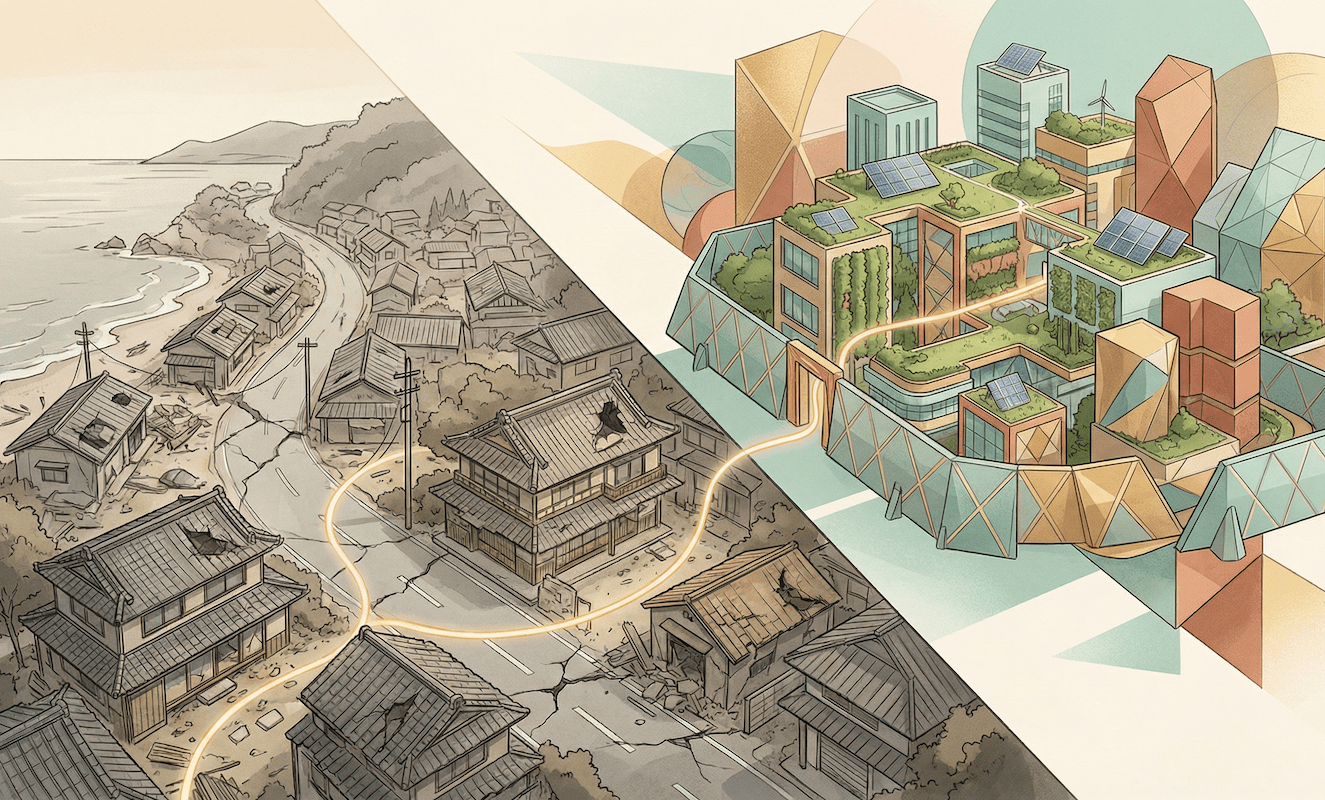
These words of British Prime Minister Winston Churchill resonate in modern Japanese society with an ironic and paradoxical meaning. The buildings that once symbolized the dream of becoming a "personal home" during the period of rapid economic growth have now lost their owners and become a "negative legacy" that corrodes local communities and distorts our living environment.
According to the 2023 Housing and Land Survey published by the Ministry of Internal Affairs and Communications, the total number of vacant houses in Japan has reached a record high of approximately 9 million, with the vacancy rate reaching a record high of 13.8%. In response to this abnormal situation where approximately one in seven houses is vacant, the government has unsheathed its secret weapon, the "Act on Special Measures Concerning the Promotion of Measures for Vacant Houses, etc." (hereinafter referred to as the Vacant House Act), and is tightening regulations year by year.
The rules surrounding real estate ownership have changed dramatically since the law was enacted in 2015 and then radically revised in 2023. Shocking headlines like "Property taxes to increase by up to six times" have been making the rounds, but few people fully understand the legal logic behind it or the specific defensive measures we should take.
This article comprehensively examines the historical changes in the Vacant Houses Act, the latest revisions, comparisons with other countries, and the unique circumstances faced by cold regions such as Hokkaido. Why is the government now stepping up its intervention in "personal property"? We will uncover the full picture.
1. The Dawn of Vacant House Law: Beyond the Barriers of Private Property Rights
The "hands-off" era before 2014
First, let's turn back the clock a little and look back at the time in Japan when the Vacant Houses Act did not exist. At that time, the local government was shrouded in a deep sense of powerlessness. Even if the abandoned house next door was on the verge of collapse and roof tiles were falling onto the school route, city hall officials could not even "enter the premises without the owner's permission."
Behind this lies the strong "property rights" guaranteed by Article 29 of the Japanese Constitution. Reflecting on the prewar experience, it has been considered that public authorities should be extremely cautious about interfering with private property. Disputes over "neighborly relations" under the Civil Code have always been handled as private matters (non-intervention in civil matters), and the government could only repeatedly ask people to "resolve the issue through discussion."
However, the declining birthrate, aging population, and declining population have led to a situation where even those people with whom to "discuss" have disappeared. The owner is unknown, or the heirs are scattered among dozens of people and cannot be contacted. The increase in such "land with unknown owner" has caused the problem of abandoned vacant houses to explode.
2015: The Arrival of a Paradigm Shift
To break this deadlock, the first Vacant Houses Act was enacted and fully implemented in May 2015. This law marked a major turning point in postwar land law, as it granted the government the following powerful powers:
The new law allows local governments to enter premises to conduct necessary inspections without the owner's consent. Owners who refuse are subject to a fine of up to 200,000 yen. This means that for the first time, local governments can officially check the "conditions inside."
A process has been established to designate extremely dangerous vacant houses as "specific vacant houses, etc." and to provide advice, guidance, recommendations, and orders for removal (demolition, etc.). If orders are not followed, the government can now carry out "administrative subrogation," demolishing the property on behalf of the resident and claiming the costs.
2. The impact of the 2023 amendment: the creation of new "poorly managed vacant houses"
Why was the amendment necessary?
Even after the law came into effect in 2015, the pace of increase in vacant houses showed no signs of slowing. The issue that became apparent on the ground was that once a house is designated as a "specific vacant house" (a dangerous house on the verge of collapse), it is already too late to do anything about it.
In other words, even if the government takes action after the roof falls and the walls collapse, it is impossible to repair and reuse the building. In addition, demolition costs are so high that owners cannot pay, and in many cases the costs end up being borne by taxes (which cannot be recovered).
Therefore, the government carried out a major revision of the Vacant Houses Act in December 2023 (Reiwa 5). The key words are "early detection and early treatment."
What is a "vacant house that is not being managed properly"?
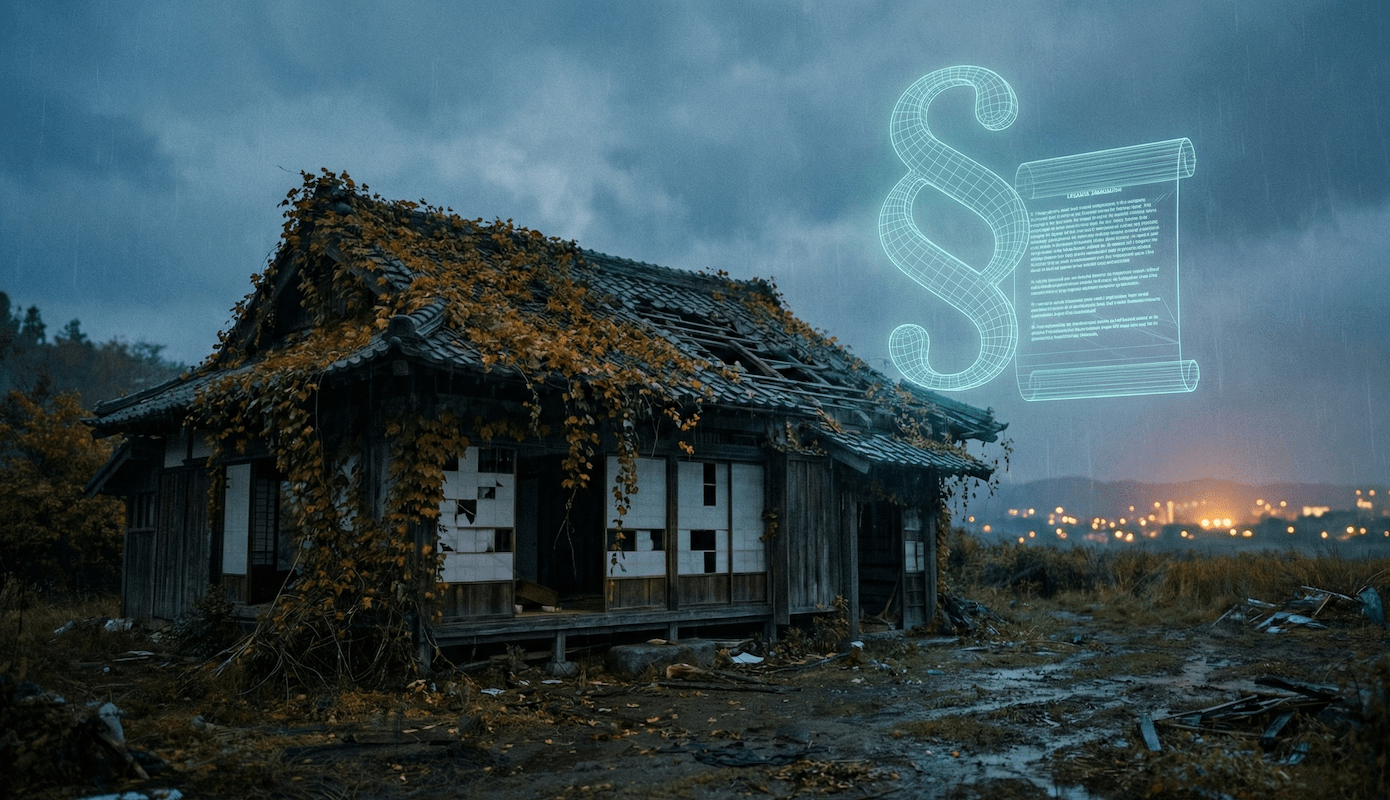
The biggest feature of the revised law is the creation of a new category called "poorly maintained vacant houses." This refers to houses that are not yet at risk of collapse, but are at high risk of becoming designated vacant houses in the future if left unattended.
Specifically, the following situations are assumed:
- ● The window glass has been left broken.
- ● Weeds and garden trees are overgrown and are threatening to overtake the neighboring property.
- ● Peeling is observed on parts of the exterior wall.
Until now, the government has not been able to take strong action against such "mild" deterioration. However, after the amendment, it has become possible to provide guidance and warnings at this stage, and even to impose a strong penalty, namely the "cancellation of tax benefits," which will be discussed later.
3. Economic Impact: The Logic Behind the Quadruple Increase in Property Tax
We often see reports in the media that "property taxes will increase sixfold" or "fourfold." Do you understand the exact basis for these figures? This is not simply a tax rate increase, but a de facto tax increase due to the removal of "special exemptions (discounts)."
The mechanism of the residential land exemption and the impact of its cancellation
In Japan's tax system, there are policy considerations for "land for people to live on (residential land)," and special provisions have been established to significantly reduce the taxable amount of fixed asset tax.
| classification | Special provisions (discount rate) | Conditions of application |
|---|---|---|
| Small residential land | Appraised value 1/6 Reduced to | 200㎡以下の部分 (一般的な戸建てはほぼこれに該当) |
| General residential land | Appraised value 1/3 Reduced to | Areas exceeding 200m² |
| 特例解除後 (勧告を受けた場合) | No discount (1/1) *Actually about 3 to 4 times higher due to burden adjustment measures | 特定空家等、または 管理不全空家等として勧告を受けた土地 |
Thus, until now, there has been an incentive to leave a house standing rather than demolish it, because "land taxes were low even if it was dilapidated." However, under the revised Vacant Houses Act, this "1/6 exemption" will be lifted once a local government issues a notice regarding a "vacant house that is being poorly maintained."
A simple calculation would show that the tax amount would be six times higher, but in reality, there are "burden adjustment measures" to mitigate the sudden tax increase, so in many casesApproximately 3 times to 4 timesEven so, if the annual tax increases from 50,000 yen to 200,000 yen, it will be a major blow to owners, and they will be under clear economic pressure to "abandon their pets at a loss."
4. The reality as seen through data: Increasing number of vacant houses and government responses
Trends and future forecasts for the number of vacant houses
Based on data from the Ministry of Internal Affairs and Communications, we visualize the trend in the number of vacant homes in Japan. The upward trend shows no signs of slowing down, and is predicted to accelerate further in the 2030s.
Trends in the number of vacant houses in Japan (unit: 10,000 houses)
Source: Prepared from the Ministry of Internal Affairs and Communications Statistics Bureau's "Housing and Land Statistics Survey"
Of particular note is the fact that the number of vacant homes "not for rent or sale" (so-called abandoned vacant homes) has risen to approximately 3.85 million, an increase of approximately 370,000 since the previous survey. This means that there is a growing number of "dead" properties that are not on the market.
A forecasting model by Nomura Research Institute warns that unless progress is made in demolishing existing homes, the vacant house rate will exceed 20% by the 2040s, and could approach 50% in some depopulated areas. If half of a city becomes vacant, it will become impossible to maintain government services.
5. Regional Case Study: "Snow" and "Ruins" in Hokkaido
Collapse mechanism specific to cold regions
The vacant house problem varies from region to region. In Toyako Town, Hokkaido, and surrounding municipalities, where I conducted research, there was a serious risk that was incomparable to that in areas south of the Kanto region: snow load.
In homes where people live and heating is turned on, snow on the roof melts easily due to the heat from inside the home, and the snow is regularly removed. However, in vacant homes, snow continues to accumulate on the roof, turning into ice blocks that continue to exert a load of several tons. The beams and pillars of wooden houses reach their limits after just a few seasons of neglect, and one day they will suddenly collapse with a loud bang.
Even more frightening is falling snow. Ice blocks flying into a neighbor's living room, hitting a propane gas tank, or falling on a child walking on the street are not rare cases. This is why Hokkaido's criteria for designating specific vacant houses place emphasis on the risk of snow damage.
The problem of huge abandoned tourist spots
Another problem specific to tourist destinations like Toyako Onsen is the abandonment of large hotels built during the bubble period. While the demolition cost of a private home is in the range of several million yen, the demolition of a large reinforced concrete hotel can cost anywhere from several hundred million yen to over a billion yen.
If the company that owns the building goes bankrupt or is dissolved, who will bear the enormous costs? It is extremely difficult to reach a consensus among residents about using public funds (tax money) to cover demolition costs, which are equivalent to the annual budget of a local government. As a result, huge ruins like haunted hotels will continue to remain as intruders in the beautiful landscape. This is a national-level issue that cannot be solved by the Vacant Houses Act (guidance to individual owners) alone.
6. Global Comparison: How the World is Competing
On the other hand, if we look overseas, we can see that the penalties for vacant houses are stricter than in Japan. In Europe and the United States, the idea that "ownership comes with obligations" is firmly established, and abandoning a house is considered a social evil.
| Country/region | Major systems and penalties | Characteristics and Philosophy |
|---|---|---|
| イギリス (イングランド) | Council Tax Surcharge 空き家期間1年以上で税額2倍 5年以上で3倍、10年以上で4倍 | 「資源の浪費」に対する懲罰的課税。 雪だるま式に増える税負担で売却を強いる。 |
| ドイツ (ハンブルク等) | Residential Conversion Prohibition Act 正当な理由なき空室放置に対し、 最大50万ユーロ(約8,000万円)の罰金 | 憲法に基づく「所有権の義務」。 住宅不足解消のため、強制的に市場へ戻させる。 |
| アメリカ (ワシントンDC) | Blight Tax 通常の居住用不動産税率(0.85%)に対し、 荒廃物件には10.0%の超高率課税 | 「割れ窓理論」に基づく治安維持。 経済的に保有不可能にし、開発業者へ流動化させる。 |
Compared to these examples, Japan's Vacant Houses Act could be said to have just reached the "starting line." While Europe and the United States enforce action through "penalties," Japan still appears to be trying to encourage action through "guidance and incentives," but the 2023 revision is a signal that the balance has clearly shifted toward "stricter enforcement."
7. Conclusion: Exit Strategy for Owners
Linked to the mandatory inheritance registration in 2024
One thing we must not forget, along with the revision of the Vacant Houses Act, is the "mandatory inheritance registration" that began on April 1, 2024. Registration, which was previously optional, will now be mandatory, and if you do not apply within three years of learning of the inheritance, you may be subject to a fine of up to 100,000 yen.
This will gradually close the loophole of claiming the property is "unknown owner." The government is linking the land registry with the family register, pinpointing who is responsible, and establishing a system to issue guidance notices based on the Vacant Houses Act.
Conclusion: Change your mindset from "asset" to "responsibility"
As is clear from previous surveys, the meaning of real estate ownership in Japan has undergone a fundamental transformation. Land was once an asset that would increase in value if owned, but in today's declining population, it is increasingly viewed as a liability that requires ongoing maintenance costs and legal responsibility.
The designation of vacant houses as poorly maintained and the lifting of special property tax exemptions are not harassment by the government. They are a strong request from society that "if you cannot take responsibility, let go and entrust it to someone else."
Therefore, the actions that should be taken by those who currently own vacant houses or who plan to inherit them in the future are clear.
- Understanding the current situation:Check the registration status of your parents' home and the state of deterioration of the building on site.
- Family meetings:The discussion is not about "who will take over" but "who will close (dispose of)."
- Early decision:Before being designated as a specific vacant house, it must be sold, demolished, or registered in the "vacant house bank."
Postponing the issue will inevitably come back to haunt you with high interest in the form of higher taxes, neighborhood troubles, and family disputes. Now is the time to make a decision while there are still options.
Related Links
- Ministry of Land, Infrastructure, Transport and Tourism: About the Special Measures Act on the Promotion of Measures for Vacant Houses, etc.
- Statistics Bureau, Ministry of Internal Affairs and Communications: 2023 Housing and Land Statistics Survey
- Ministry of Justice: Review of real estate rules to resolve land ownership issues
Inquiries and requests
We help solve local issues.
Please feel free to contact us even if it is a small matter.