〜A new perspective and concrete measures to prevent assets from becoming "liabilities"
*This article is based on the latest laws and statistical information as of December 2025.
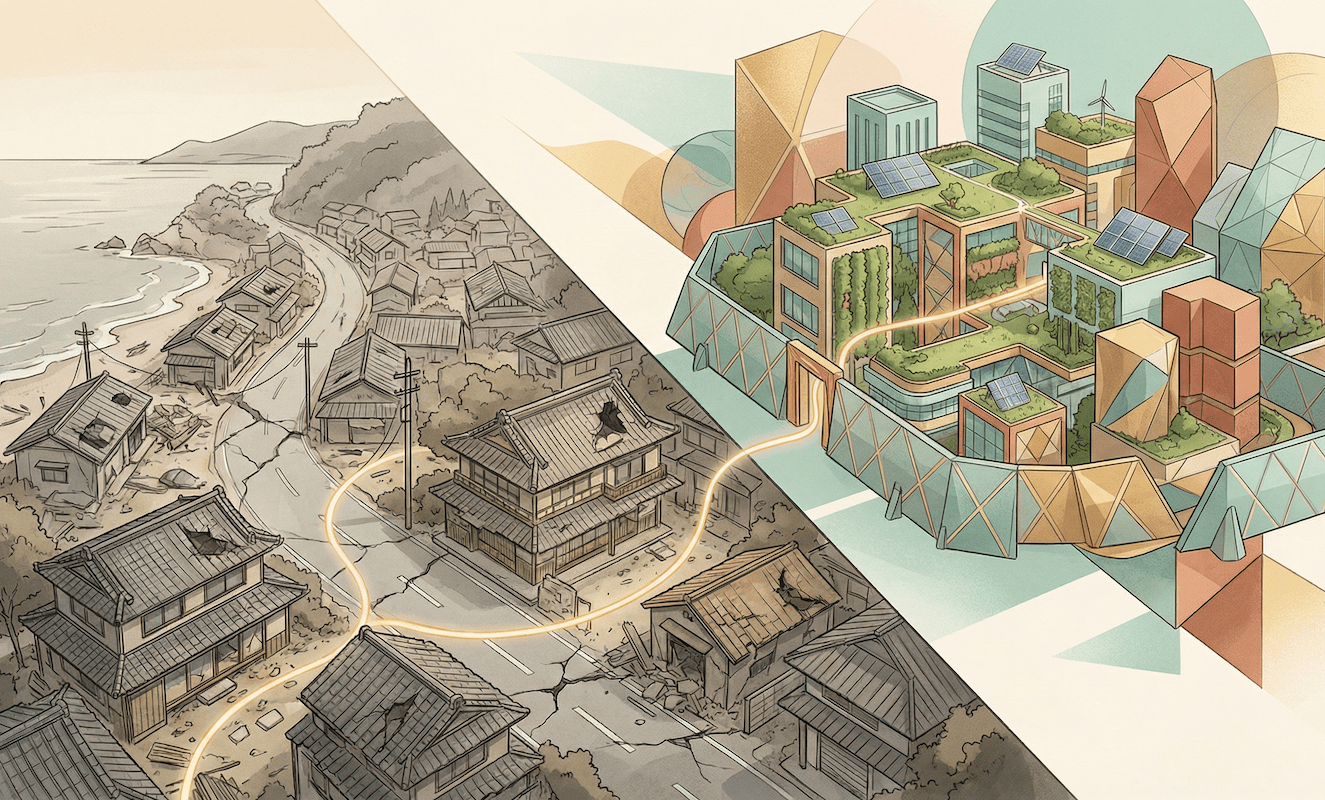
There is a saying that "building a house is creating an era." This saying conveys the idea that "the people who will be truly inconvenienced by building a poor building are not the people of today, but the people of the future, who will have no choice but to inherit that building." During the period of rapid economic growth, owning a home was a symbol of wealth and the goal of personal asset formation. However, in modern Japan, where the population is declining and the birthrate is aging at an accelerating pace, the meaning of "assets" is changing dramatically.
The "mandatory inheritance registration" came into effect in April 2024, followed by the 2023 amendment to the "Act on Special Measures for Vacant Houses." This series of developments clearly demonstrates that the government is no longer tolerant of "abandoned real estate." Land that once increased in value simply by owning it is now turning into a huge "liability" that threatens the owner's livelihood if not properly managed.
Why has the problem of vacant homes become so serious? And what specific actions should we, the owners, take? This article will unravel the true nature of the structural issues we face through a detailed explanation of the latest data and legal systems, a comparison with housing conditions overseas, and the case study of Toyako Town in Hokkaido. This is not just a story about real estate, but a report on "asset defense" to survive wisely in Japan in the future.
1. From "Asset" to "Social Responsibility": A Paradigm Shift in the Definition of Vacant Houses
First of all, when discussing the "vacant house problem," it is essential to have an accurate understanding of its definition. Generally, a vacant house is a building that has not been occupied for a long period of time and has no history of using lifelines (water, electricity, gas). However, did you know that the current legal system (Act on Special Measures Concerning the Promotion of Measures for Vacant Houses, etc., hereinafter referred to as the "Vacant House Act") clearly divides vacant houses into stages based on the degree of government intervention?
The important point here is that it is not simply a matter of "no one living in the property" but rather "whether or not it is maintained" that will be the deciding factor in determining the owner's fate.
What is the new and frightening category of "poorly managed vacant houses"?
Previously, strong penalties from the government were limited to "specified vacant houses" that were in imminent danger of collapsing. If a house is designated as a specified vacant house, the preferential treatment for fixed asset tax (special exemption for residential land) is cancelled, the tax amount jumps up to six times, and ultimately the house may be subject to forced demolition by administrative execution.
However, due to the revision of the law in 2023,"Poorly maintained vacant house"This refers to the stage where "there is no risk of collapse at present, but if left as is, there is a risk that it may become dangerous (specified vacant house) in the future."
Specifically, the following situations apply:
- ● A window is broken or left open.
- ● Weeds and garden trees are overgrown and are crossing over into neighboring properties and roads.
- ● Part of the exterior wall has fallen off or signs etc. are unstable.
- ● There are signs that the property is a source of pests or harmful insects.
In other words, whereas before the government could not intervene until the property was in ruins, after the amendment, the government can now provide guidance when the windows are broken. Even if the property is in the stage of being a "vacant house that has been poorly maintained," if the government does not follow the advice of the government,The special exemption for residential land on fixed asset tax will be lifted.This is what happened.
Therefore, the owner's complacent attitude of "it's okay because it's not yet at the point where it will collapse" will no longer be valid. The government's monitoring focus has definitely shifted to an earlier stage, and it can be said that a system has been established in which leaving the building unattended will directly lead to economic losses.
The impact of the mandatory inheritance registration system starting in April 2024
Further putting pressure on owners is the mandatory inheritance registration that came into effect on April 1, 2024. This is a national project to resolve the problem of land with unknown owners, which has been a breeding ground for the vacant house problem.
Specifically, from the day you learned that you had inherited real estate.Within 3 yearsIf you fail to do so without a valid reason,Fine of up to 100,000 yenIn addition, if you have inherited real estate in the past that has not yet been registered, you will need to register it during the grace period until March 31, 2027.
This means that it is no longer legally permissible to continue with a situation where the title to a vacant house remains in the name of a deceased grandfather. The government is trying to clarify who is responsible for the vacant house through the land registry, and to determine who should be charged for management costs and taxes.
2. Japan's uniqueness revealed through historical background and comparison with other countries
So why has the number of vacant houses in Japan increased so dramatically that it has become a social problem? The reason lies in Japan's unique housing policy and market structure since the end of World War II.
The curse of "new construction supremacy" and the "1940 system"
Japan's vacant home rate is approximately 13.8%, meaning that roughly one in seven homes is vacant (Ministry of Internal Affairs and Communications, 2023 Housing and Land Statistics Survey). This figure is extremely high even by global standards.
During the post-war reconstruction period from the ruins of the country, the government made "eliminating the housing shortage" its top priority and strongly promoted the acquisition of newly built homes. The Japan Housing Loan Corporation's loan program and the development of new towns are examples of this. The value that "homes should be purchased as new buildings" (new construction supremacy) that was formed during this period remains strong to this day.
Additionally, the fixed asset tax policy for land had a major impact. This was the "Residential Land Special Measures," which reduced taxes on land on which houses were built by up to one-sixth. Initially, this was an incentive to promote home ownership, but as the population began to decline, this became the biggest factor in creating the economic rationale for leaving vacant houses, as it was thought that "it is cheaper to leave abandoned buildings, even if they are dilapidated, than to clear the land."
[Comprehensive Comparison] Japan vs. Western Countries
To understand the unique nature of Japan's vacant house problem, we have compiled comparative data with other major developed countries. Please see the table below.
| Comparison items | Japan | United Kingdom (UK) | United States (USA) |
|---|---|---|---|
| Vacancy rate (estimated) | Approximately 13.8% (worsening) | Approximately 2.5% (low standard) | Approximately 11% (large regional differences) |
| Housing lifespan and value | Wooden structures last about 20 to 30 years. Asset values are almost zero |
The older it is, the more valuable it is It's not uncommon for buildings to be 100 years old. |
Depends on maintenance Value is maintained and increased |
| Used goods distribution share | Approximately 15% (weighted towards new construction) | Approximately 85% (mainstream used) | Approximately 80% (used mainstream) |
| Dealing with vacant houses | Strong ownership and slow intervention Stricter from 2023 |
Strong administrative authority Vacant house tax and other penalties |
Selection by market principles Areas with deteriorating security are left unattended |
*Data for Japan is from the Ministry of Internal Affairs and Communications' "2018/2023 Housing and Land Statistics Survey," while data for the UK and US are estimates based on announcements from each country's housing ministry and data from the Ministry of Land, Infrastructure, Transport and Tourism.
As can be seen from the table above, the UK and the US have a deeply rooted culture of "home = buying a used house, renovating it, and living in it." In the UK in particular, the government exerts strong control over vacant houses, imposing an additional tax of 50% to 300% on top of the regular council tax (resident's tax).
Meanwhile, Japan has a strong "faith in new construction," resulting in a stagnant market for used homes. As a result, the country is caught in a vicious cycle where new homes continue to be built despite a declining population, leaving older homes unattended and in surplus. As data from the OECD (Organization for Economic Cooperation and Development) shows, Japan faces the paradox of a continuing increase in vacant homes despite the country's housing affordability issues.
3. Region-specific risks and possibilities: A case study of Toyako Town, Hokkaido
The problem of vacant houses is not a uniform issue across the country. The characteristics and risk factors vary greatly depending on the region. Here, we will take a closer look at the case of Toyako Town in Hokkaido, which is one of Japan's leading tourist destinations but also faces the harsh environmental conditions unique to cold regions, and analyze the forefront of the problem of vacant houses in rural areas.
Regenerative potential as a tourism resource
Toyako Town is a world-famous resort area known for hosting summits. It has the potential to earn foreign currency, which sets it apart from regional cities that are experiencing depopulation.
Specifically, the following uses are possible:
- ✅ Private lodging for inbound tourists:
Vacant lakeside houses will be renovated into luxury condominiums for wealthy tourists who value privacy. - ✅ Support for relocation and dual residence:
With the spread of telework, properties are being rented or sold to those seeking a rich natural environment.
By utilizing the "Vacant House Management and Utilization Support Corporation" system, which will be promoted by a legal revision in 2023, and creating an environment that makes it easier for private businesses to enter the market, vacant houses can be transformed from a "negative legacy" into "profitable infrastructure for the local community."
The time bomb known as "snow damage"
On the other hand, the biggest risk factor specific to Hokkaido is snow accumulation. Unlike vacant houses in Honshu and further south, vacant houses in Hokkaido are not cleared of snow during the winter, so there is an extremely high risk of them being physically crushed by the weight of the snow.
Even more serious is the risk of environmental pollution.
- ⚠️ Damage to neighboring house due to roof collapse:
There have been many incidents of collapsed houses crushing neighboring houses. - ⚠️ Kerosene spill from a home tank:
Large-capacity kerosene tanks, common in homes in Hokkaido, have been damaged by collapses and falling snow. Leaked kerosene has contaminated the soil and rivers, resulting in damages of tens of millions of yen in some cases.
Therefore, Toyako Town's measures to deal with vacant houses are not simply about maintaining the landscape, but can be seen as "disaster prevention and environmental measures" in themselves, aimed at protecting the lives of residents and the region's environmental brand.
The reality as seen from administrative data
An analysis of Toyako Town's assembly minutes and documents related to its vacant house countermeasure plan revealed that the number of specific vacant houses known to the town was not particularly large compared to the total number of homes. However, a simple survey conducted in 2025 revealed that the number of vacant houses was at a rate similar to the national average.
However, due to privacy concerns, it is not easy for the government to conduct on-site inspections. The current situation is that they rely on objective data such as water outage information and reports from local residents to understand the actual situation. In other words, it is believed that there are many "potentially poorly managed vacant houses" that cannot be identified through simple inspections.
4. The 2040 Problem and Future Options
Finally, we will consider future predictions and specific actions we should take. According to a forecast by Nomura Research Institute, if current trends continue, the vacant house rate in Japan will be approximately 25% by 2040, and in an even more pessimistic scenario, it is estimated to exceed 30%. This means that more than one in four houses will be vacant in the future, which would mean the collapse of local communities.
"Residentially Induced Zones" and Infrastructure Withdrawal
In municipalities facing declining populations, it will become financially impossible to maintain and update all roads, waterworks, and bridges. What will happen as a result? In the name of "compact city" development, the selection (line drawing) will likely be made clear between areas where administrative services will be maintained (residentially-oriented areas) and areas where infrastructure maintenance will effectively be reduced or withdrawn.
If your vacant house is included in the "Exclusion Area," its asset value will approach zero, making it impossible to sell or rent. Your only option may be to pay a high price to demolish it and return it to nature (return it to wilderness).
Four options owners should consider now
To prevent this "evaporation of asset value," owners should urgently consider the following four options:
|
1. Selling (vacant house bank/real estate company) This is the most sound solution. Don't focus on the price, prioritize getting rid of it. You may need to be prepared to be happy even if you can sell it for just 1 yen. |
2. Use (rental, private lodging, warehouse) Instead of spending too much on renovations, rent out the property as a DIY-friendly property. However, the maintenance work will continue. |
|
3. Demolition (demolition and vacant lot) Although property taxes will increase, the risk of compensation for poor management will be eliminated. In some cases, it may be easier to sell the property. Check the local government's "demolition subsidy" system. |
4. Abandonment (system of inherited land becoming the property of the national treasury) This is a new system that will begin in 2023. There are strict requirements (such as the land being vacant), but by paying the inspection fee and charges to the government, ownership of the land can be returned to the government. |
Conclusion: Let go of attachment to "ownership" and contribute to "circulation"
Former British Prime Minister Winston Churchill once said, "We shape our buildings; thereafter they shape us."
The increase in dilapidated and vacant houses spoils the local landscape, worsens public safety, and erodes the vitality of the community. Conversely, land that is properly managed or courageously demolished and reused can bring new people and economic cycles to the area.
In the coming era, the most important quality required of real estate owners will not be an attachment to "holding on to ancestral land at all costs." It will be the ability to calmly assess whether the land or building has become a "liability" to themselves or the community. And if they are unable to manage it themselves, making the decision to use platforms such as vacant house banks, NPOs, and private businesses to release resources (by selling, renting, or transferring) to the next generation who need them is the truest form of "asset protection" and the greatest contribution to the community.
The legal reforms and mandatory registration are not "threats" from the government. For those of us who have been putting off the issue, why not consider this our last chance to make a decision and start taking concrete action today (holding family meetings, checking registration, requesting appraisals)?
Related Links
- Information related to the Special Measures Act on Promotion of Measures for Vacant Houses, etc. – Ministry of Land, Infrastructure, Transport and Tourism
- Regarding the mandatory application for inheritance registration – Ministry of Justice
- 2023 Housing and Land Statistics Survey – Statistics Bureau, Ministry of Internal Affairs and Communications
Inquiries and requests
We help solve local issues.
Please feel free to contact us even if it is a small matter.