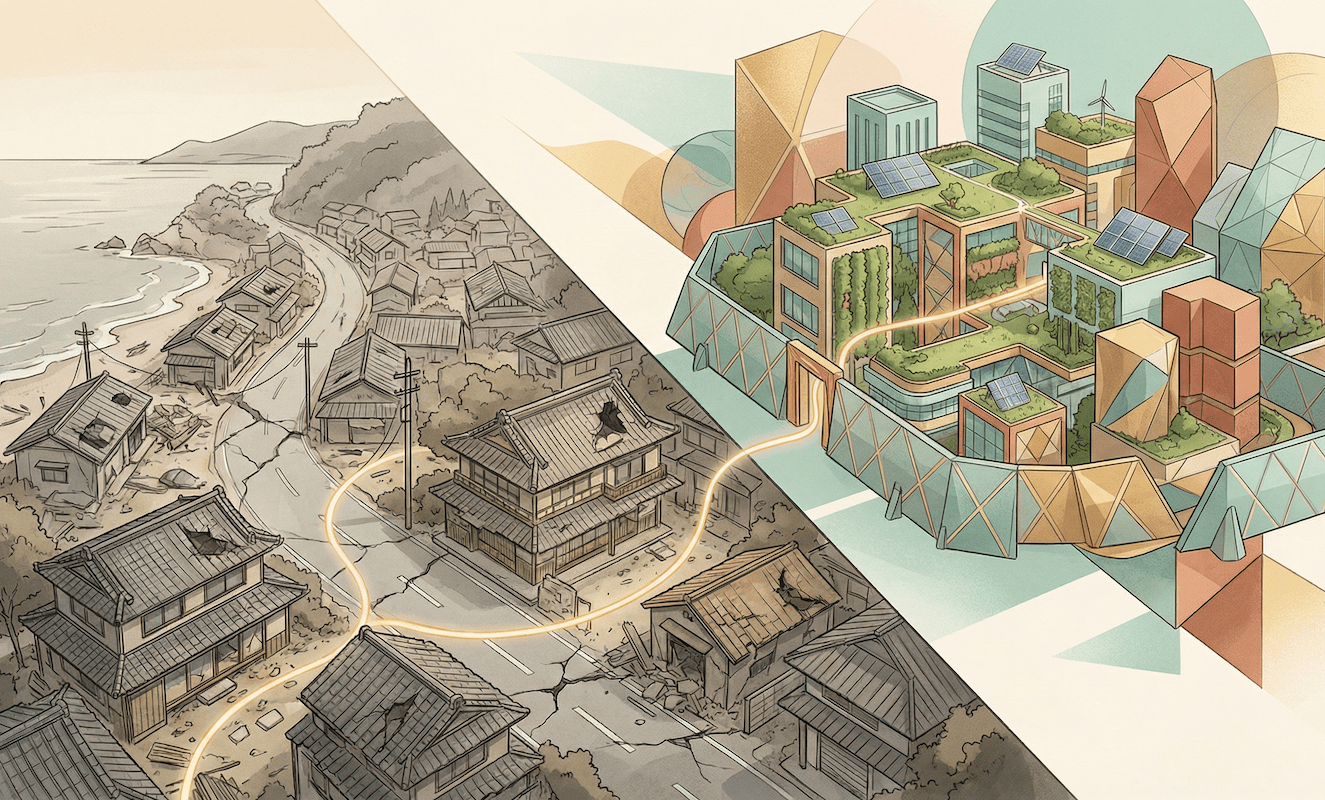
〜The history of disasters behind the legal reform and their impact on future real estate values and the local economy〜
*This article is based on information on legal reforms scheduled to come into effect in April 2025 and market data as of the end of 2024.
"Natural disasters strike when we least expect them." This aphorism by physicist Torahiko Terada has long been passed down as truth in earthquake-prone Japan. However, when we look at history from the cold, objective perspective of building regulations, a different truth emerges.
In other words, Japan's Building Standards Act was created to reflect the lessons learned from the enormous loss of life and property caused by unexpected natural disasters."Bloody Resume"The fact is that...
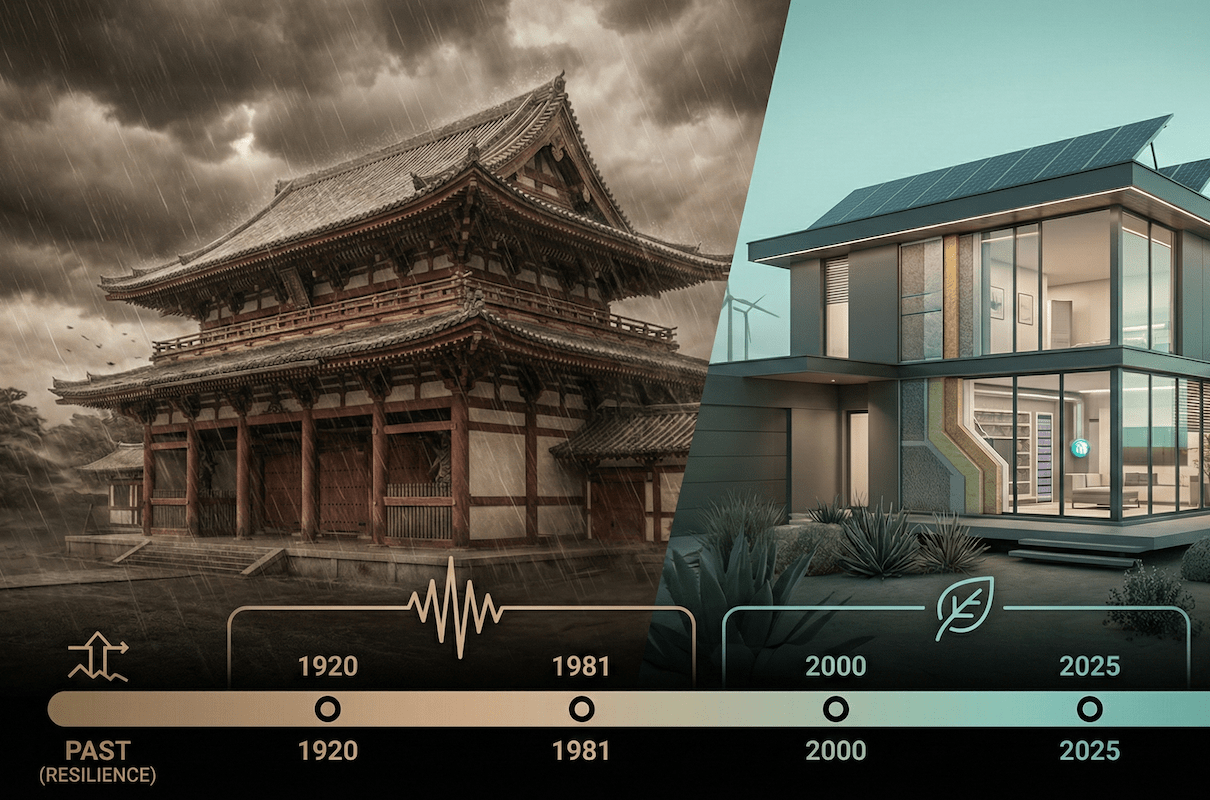
Now, we are standing in the year 2025 (Reiwa 7), a major watershed in the history of architecture. The upcoming revision of the law in April marks the biggest paradigm shift since its enactment, placing at the core of the law a new justice: "environmental sustainability (energy conservation)," in addition to the "physical strength (earthquake resistance)" that has been pursued for the past century.
In this article, we will take a detailed look at the history of disasters and legal changes, explain why this revision is "historic," and what irreversible changes it will bring to our "homes" and "assets."
1. Disasters Redefine "Safety": A 100-Year History
The history of building regulations in Japan is also a history of an endless "cat and mouse game" between urban development and the destructive natural disasters that threaten it. Many legal reforms have been made immediately after some kind of tragedy. Here, we trace the history of how our current "safety" was formed.
1-1. From the dawn to the postwar period: the birth of earthquake resistance regulations
The origins of Japan's modern building legislation date back to the Urban Buildings Act of 1920 (Taisho 9). However, its true value was put to the test just three years after its enactment.
In 1923 (Taisho 12), the Great Kanto Earthquake occurred, causing devastating damage to Tokyo and Yokohama. In response to this unprecedented event, the following year in 1924, Japan became the first country in the world to legislate earthquake resistance regulations. This was the first time that the concept of horizontal seismic intensity of "seismic intensity 0.1" was introduced. After a period of postwar chaos, the current Building Standards Act was enacted in 1950 (Showa 25), and has since established itself as the minimum standard for protecting the lives of citizens.
1-2. The shock of 1981: The absolute boundary line of the "New Earthquake Resistance Standards"
The 1978 Miyagi Prefecture Offshore Earthquake occurred amid increasing urban overcrowding following the period of rapid economic growth. This disaster, which saw the collapse of block walls and shear failure of reinforced concrete buildings, came as a shock to the building administration.
Following this, June 1, 1981 (Showa 56) marked the biggest turning point in determining the value of real estate in Japan."New Earthquake Resistance Standards"The key point of this revision is that it introduced the concept of horizontal bearing capacity, which means that buildings must not collapse or break down even in a major earthquake of seismic intensity 6+ to 7 (secondary design), in addition to the previous requirement of not being damaged by an earthquake of seismic intensity 5 or so (primary design).
Even today, 1981 serves as an absolute dividing line when it comes to second-hand real estate transactions and the applicability of mortgage tax deductions.
1-3. 2000 Standards: Overcoming the weaknesses of wooden houses
The next turning point was the Great Hanshin-Awaji Earthquake of 1995. While the effectiveness of the new earthquake resistance standards was proven, serious weaknesses in wooden houses were also revealed. In particular, "tenon gaps" - where pillars come loose from the foundation - and poor wall alignment (eccentricity) were identified as the main causes of collapse.
In response to this, the law was revised in 2000 (Heisei 12) (commonly known as the 2000 Standards) to specifically strengthen the earthquake resistance of wooden houses. These included making it mandatory to conduct ground surveys, specifying metal joints for column capitals and column bases (hold-down metal, etc.), and calculating the balance of the placement of bearing walls (eccentricity ratio of 0.3 or less), and these established the basis for current wooden design.
| Era and occasion | Main revisions | Modern-day impact and significance |
|---|---|---|
| 1981 (New earthquake resistance) | Clarifying the need to prevent collapse in earthquakes of magnitude 6+ to 7. Introduction of calculations for horizontal bearing capacity. | This is the biggest dividing line in real estate valuation. Buildings built before this date are considered to be "old earthquake-resistant" and have significantly lower asset value. |
| 2000 (strengthened wooden structure) | Ground investigations are now essentially mandatory. Metal joints are required. Wall placement balance (eccentricity) is checked. | The reliability of wooden houses has improved dramatically. Wooden houses built before 2000 are now recommended to undergo earthquake resistance inspections. |
| 2025 (Energy Conservation/No. 4 Special Exception) | Reduction of the No. 4 exception (establishment of a new No. 2). Full obligation to comply with energy conservation standards (grade 4). Stricter confirmation application procedures for large-scale repairs. | Double obligation to perform structural calculations and energy-saving calculations. Creating a new standard for asset value. |
2. The essence of the 2025 problem: "double obligations" on energy conservation and construction
The construction industry will face a historic turning point in April 2025. While previous revisions have primarily focused on earthquake countermeasures (physical strength), the biggest feature of this revision is that it also addresses the global issue of decarbonization (environmental performance).
2-1. Reducing the "No. 4 Exception" and visualizing its structure
Previously, small houses such as two-story wooden buildings were subject to the "No. 4 Exception," which allowed for partial exemption from structural inspections if the house was designed by an architect. This was a remnant of the rapid supply system aimed at resolving the housing shortage after the war.
However, in practice, this has led to the misinterpretation that "structural calculations are not necessary," and has created the risk of producing homes that are not earthquake-resistant. In fact, investigations into the Kumamoto earthquake and other disasters have confirmed damage to some homes built under the special provisions.
This latest revision will result in a fundamental review of this classification. For newly constructed "New Type 2 Buildings," even two-story wooden buildings and single-story buildings of a certain size will be required to submit documents such as "wall volume calculations" and "floor plans" when applying for confirmation. In other words, we are moving away from the long-standing reliance on "designer intuition" and "experience" and are entering an era in which numerically based safety certification is required for all housing.
2-2. Full obligation to comply with energy conservation standards
At the same time, all new buildings will be required to comply with energy-saving standards (insulation grade 4 or higher) in principle. Accordingly, energy-saving related documents (envelope calculations, primary energy consumption calculations) will be required to be submitted when applying for building confirmation, and construction of buildings that do not comply will not be allowed to begin.
This is a declaration of the nation's determination to achieve carbon neutrality by 2050, and means that homes will be forced to evolve from mere "shelters" to "environmental devices" that manage energy.
3. The truth behind the "world's highest construction costs" as seen through data
Making compliance with the legal reforms even more difficult is the record-high rise in construction costs. Due to a combination of the weak yen, rising material prices, and a labor shortage caused by restrictions on overtime work in the construction industry (the 2024 issue), construction costs in Tokyo are among the highest in the world.
The graph below shows a comparison of construction costs (per square meter) in major cities. It can be seen that Japan's high costs are not simply a matter of prices, but are due to structural factors that are pushing up basic costs, such as strict "earthquake resistance requirements" and "quality requirements."
Comparison of construction costs in major cities (2024 estimate, converted to USD)
*These prices are exceptionally high in Asia. Regional cities (such as Sapporo and Fukuoka) are also among the top 15 in the world.
Source: Created based on Arcadis International Construction Costs 2024, etc.
4. The Struggles of Local Cities: A Case Study of Toyako Town, Hokkaido
These legal reforms and rising costs will not hit the entire country equally. The impact will be particularly severe in cold, snowy regions like Hokkaido. Here, we will analyze the triple whammy facing regional areas, using the tourist destination of Toyako Town as an example.
The entire Hokkaido region experiences heavy snowfall, and the weight of snow that accumulates on roofs (snow load) places a tremendous strain on structures. Until now, local carpenters have handled this using their "rules of thumb," but from 2025 onwards, strict "wall volume calculations" will be required. This will require more load-bearing walls than before, and there is a risk that designs with "large openings (large windows)" to enjoy the view of Lake Toya will become difficult to realize from a structural and cost perspective.
Hokkaido's energy conservation standards are the strictest in the nation, and it is classified as a "1 or 2 region." Just meeting the mandatory standards (grade 4) increases costs, but aiming for the recommended ZEH standard requires double insulation and triple glazing. Furthermore, even the Sapporo area has some of the highest construction costs in the world, and additional costs for "craftsmen's travel expenses" and "material transportation costs" are added to the cost of transporting materials to rural areas. It's easy to imagine how this will be a significant drag on the local economy and tourism investment.
5. The trade-off between advantages and disadvantages
This legal reform is said to be beneficial to the public in the long term, but it will cause severe pain in the short term. The viewpoints of the government and businesses that are promoting it and the owners and users that will bear the costs coexist, though they are in conflict as shown below.
| [Promoter/Administrator] Perspective (Advantages) | [Opponents/Clients] Perspective (Disadvantages) |
|---|---|
| ■Visualization of asset value By quantifying structural and energy-saving performance, the opacity caused by "designer's intuition" is eliminated, and high-quality stock is created. | ■ Construction costs soar Due to upgrades to insulation and sashes, and increased costs for outsourcing calculation work, costs for detached houses will inevitably increase by hundreds of thousands to millions of yen. |
| ■ Reduce utility costs and improve your health Although the initial investment will be higher, the high level of insulation will reduce heating and cooling costs, and the prevention of heat shock is also expected to reduce medical costs. | ■ Selection of small and medium-sized businesses There is a risk that construction companies and elderly architects who are unable to handle complex calculation work will go out of business, and the housing supply capacity of the region will decrease. |
| ■ Strengthening consumer protection Making document submission mandatory will structurally reduce the risk of defective housing and shoddy construction. | ■ Obsolescence of existing stock Existing homes that do not meet the new standards will be deemed to be "underperforming" and there is a risk that their value on the used market will fall relatively. |
Conclusion: Changing mindset from cost to "investment for survival"
If we trace the history of the Building Standards Act, we can see that it was not simply a "tightening of regulations," but rather a "raising of breakwaters" to protect our lives.
It's easy to dismiss the 2025 revision as simply a "factor for price hikes." However, Japan's construction costs, which are high even by global standards, can also be thought of as insurance against severe natural disasters. Considering the harsh natural environment of Lake Toya and the risk of a major earthquake directly beneath the capital that could strike at any time, the risk of choosing a "cheap but uncalculated building" is far greater than the difference in initial costs.
Abraham Lincoln, the 16th President of the United States, said:"The best way to predict the future is to create it yourself"。
In the coming age, the truly wise choice will not be satisfied with clearing the revised legal standards (grade 4), but rather choosing a level of performance that goes beyond that (grade 5 or higher, allowable stress calculations). This is an investment that will create "secure assets" in the form of physical safety and energy independence, and pass them on to the next generation, in the face of an uncertain future of increasingly severe disasters and climate change.
Related Links
- Ministry of Land, Infrastructure, Transport and Tourism: Regarding the revision of the Building Standards Act to come into effect in April 2025 (April 2025)
- Ministry of Land, Infrastructure, Transport and Tourism: Energy-saving measures for homes and buildings (explanation of energy-saving standards)
- Forestry Agency: Forest and Forestry Basic Plan and Wood Use in 2050 Carbon Neutrality
Inquiries and requests
We help solve local issues.
Please feel free to contact us even if it is a small matter.