〜The enormous economic impact of this mecca of New Urbanism, and the dilemma of its transformation into an exclusive resort〜
*This article is based on information as of March 2026.
First, let's start with the basic premise: "We shape our buildings, and then our buildings shape us." These words were spoken by British politician Winston Churchill during the House of Commons debate (Rebuilding the Houses) in October 1943. As these words suggest, the physical vessels of cities and architecture function as powerful leverage that determine the actions and thoughts of the people who live there, as well as the state of their communities.
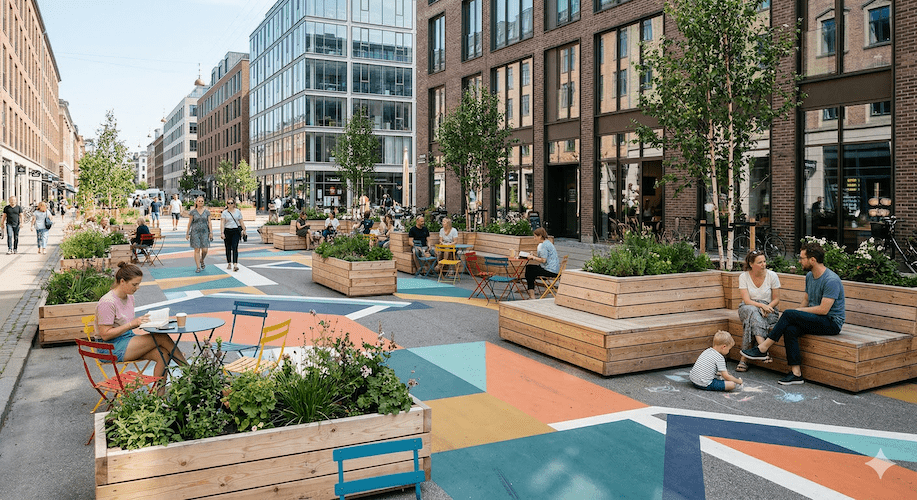
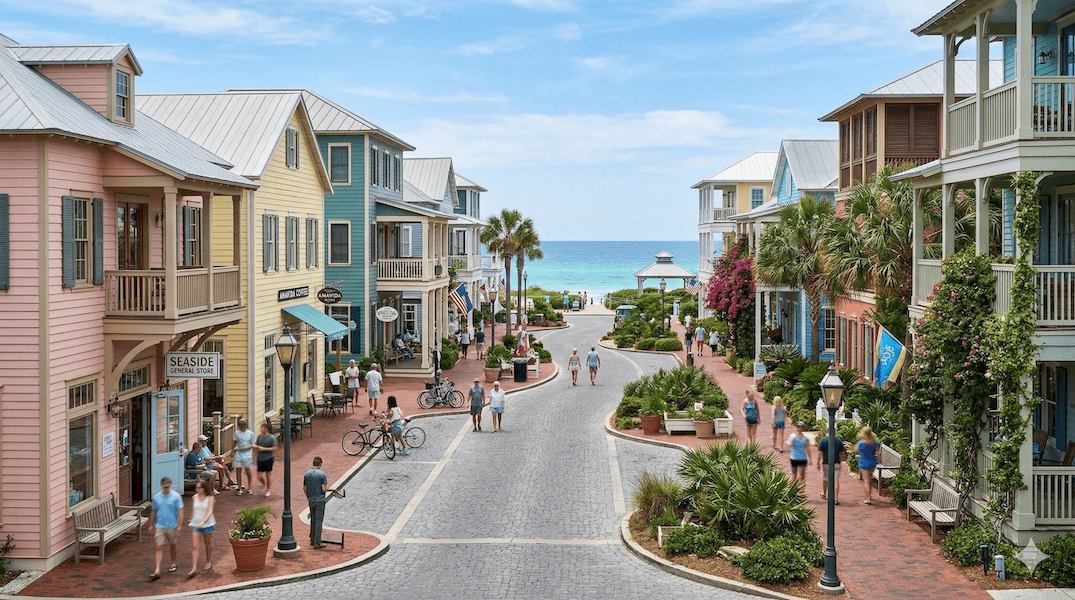
Of particular note is the history of the automobile-dependent, unregulated suburban expansion (sprawl) that exploded in the United States after World War II. A practical movement known as "New Urbanism" emerged in the 1980s as a powerful antithesis to this "human-free" urban planning. The world's first representative master-planned community that embodied this philosophy was Seaside, located on the northwest coast of Florida.
As a result, this project, which began on just 80 acres (approximately 32.4 hectares) of unincorporated land, has fundamentally redefined the "design of relationships" in urban space and has generated enormous economic capital. This article logically analyzes the historical changes in Seaside and the objective changes in real estate values, and delves into the possibility of applying this to urban development in Japan—particularly in areas with unique challenges like Toyako Town in Hokkaido—as well as the "dilemma of success" that next-generation cities face from multiple angles.
1. The birth of Seaside and the rediscovery of "lost urbanism"
Pedestrian-centered spatial design and incremental approach
According to Seaside's official timeline, its origins date back to 1946, when businessman J.S. Smolian purchased a worthless patch of sand to build a summer camp for his employees. It wasn't until 1978, when his grandson, developer Robert Davis, inherited the land, that the project really took off.
Furthermore, Davis' greatest achievement was his bold fieldwork, which he undertook with the assistance of young Miami architects Andres Duany and Elizabeth Plater-Zyberk (DPZ). They traveled to traditional small cities in the southern United States, studying and referencing their design methods and spatial compositions in depth. It was this rediscovery of "lost urbanist knowledge" that became the firm foundation (ISIZUE) of Seaside's design philosophy.
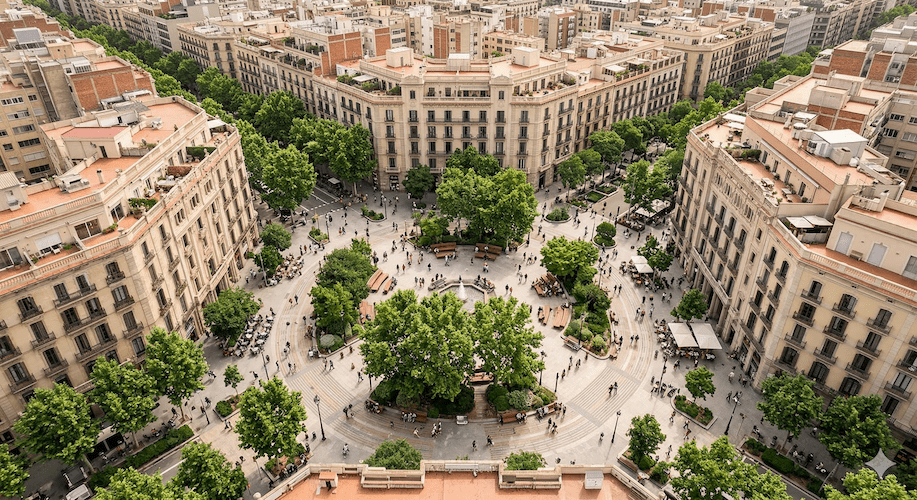
The core of the specific spatial design was a pedestrian-centered street network where most daily life is completed within a five-minute walk (approximately 400 meters), and a "mixed-use" approach that combines different uses. Then, in the early 1980s, the "Urban Code" (a regulatory method that would later be considered the prototype for the Form-Based Code) was adopted, which emphasized the relationship between public space and architectural form rather than the use of the building. The "Transect" theory, which defines the area from the natural environment to the city center in six zones, was later systematized by DPZ and others, and Seaside remains inscribed in the history of urban planning as a pioneering example of this.
Furthermore, when they began development in 1981, they chose an incremental approach, selling 20 to 30 lots per year and reinvesting the profits in infrastructure to avoid large debts due to past mistakes. This down-to-earth strategy would prove crucial in building high resilience to future market shocks.
2. Changes in asset values: The mechanism of capital strengthening as seen through a comparison of Japan and the US
"Design rarity" that stands up to the broader market conditions
The true success or failure of urban planning must be evaluated dispassionately from a capital perspective, namely, maintaining and increasing long-term real estate values. To put it simply, there is a clear difference in the mechanisms for maintaining asset values between seaside areas, which maintain the "scarcity of space" characteristic of New Urbanism, and suburban developments in Japan, which are susceptible to the influence of broader market conditions.
In particular, Seaside's perfectly designed landscape gained worldwide recognition when it was chosen as the filming location for the 1998 movie "The Truman Show" starring Jim Carrey. According to records from CNU (Congress for the New Urbanism) and other sources, land began selling for $15,000 per lot in the mid-1980s, but in recent years, sales prices have soared to the point where properties are selling for millions of dollars. Based on academic transaction data (as of 2018), the average sales price has reached approximately $1.5 million (approximately $400/sqft).
| Project name/location | Size / Real Estate Price (Latest Estimate) | Price trends and factor analysis |
|---|---|---|
| Seaside (Florida, USA) |
80 acres (approximately 32.4 ha) Average closing price is approximately $1.5 million (Data as of 2018) |
[Over the long term, prices will skyrocket by several tens of times] Prices have risen sharply since the mid-1980s, when they were worth $15,000. They showed signs of recovery after the 2008 financial crisis, but some research reports indicate that as of 2018 they have yet to recover to their peak levels of 2005. This is driven by the scarcity of properties due to strict landscape regulations. |
| Koshigaya Lake Town (Koshigaya City, Saitama Prefecture) |
Approximately 225ha Price per tsubo: Approximately 420,000 yen (approximately 22.1 million yen) |
[+27.8% compared to 10 years ago] Although it is located in the suburbs, the asset value has increased significantly due to the clear concept and convenience of the large-scale commercial facilities and waterfront environment. |
| Yukarigaoka (Sakura City, Chiba Prefecture) |
Approximately 245ha Price per tsubo: Approximately 330,000 yen (approximately 18.46 million yen) |
[Compared to 10 years ago ▲20.8%] Although the city has its own transportation system, it has been unable to resist the trend of widespread population decline and falling land prices in the suburbs, and unit prices are on a downward trend. |
*The price per tsubo in Japan and trends over the past 10 years are based on private estimates (market prices in 2022). The definition differs from official statistics (official land prices, standard land prices, etc.).
[Graph] Comparison of asset value trends in new towns in Japan and the US (long-term perspective over the past several decades)
What we must not overlook here is the essential difference between this approach and similar approaches to preventing urban sprawl. While "smart growth" emphasizes a wide-area policy system and "compact city" aims primarily at increasing the density of the entire city, New Urbanism is thoroughly focused on the "quality of the micro-experience of walkable spaces." This very fact is the source of its irreplaceable value in the market.
3. The Light and Shadow of New Urbanism
Maximizing tax revenue efficiency and optimizing infrastructure:
From an administrative perspective, while the median net residential density for single-family subdivisions in the United States is 3.2 homes per acre, Seaside achieves a high residential density of 9.2 homes per acre, according to archived data from Harvard University. This cluster design dramatically increases property tax and sales tax revenue per unit area, building a strong financial foundation for the local government.
Economic resilience and environmental adaptation:
Additionally, in Florida's tropical climate, vernacular architecture, which does not rely excessively on air conditioning, is being adopted, with street layouts that allow sea breezes to pass through, deep eaves, raised floor structures, etc. While this design suited to the climate functions as green infrastructure, it also suggests that cost factors such as insurance requirements associated with the risk of natural disasters such as hurricanes may affect the real estate market.
Severe gentrification and exclusion:
However, a fatal side effect has also become apparent. The overwhelming demand for high-quality walking spaces has led to skyrocketing land prices, making it impossible for local workers to live there. Ironically, the original idea of "coexistence among diverse social classes" has been destroyed, and the area has been transformed into an exclusive luxury resort.
The footsteps and suffocation of climate gentrification:
Furthermore, as a macro-trend across Florida, discussions are beginning to emerge about a new wave of social division known as "secondary displacement (climate gentrification)," in which wealthy people fleeing the risk of sea level rise move to safer inland areas or higher ground, driving out the original low-income people in a chain reaction. Furthermore, excessive restrictions on form imposed to preserve the landscape cannot escape criticism that they force residents into an artificial, suffocating "manufactured, homogeneous utopia."
The dilemma of success and urban ecosystems
“Cities have the potential to offer something to everyone, but only if they are created by everyone.”
These words from renowned urban planner Jane Jacobs sharply capture the biggest pain point facing Seaside today.
In fact, Seaside demonstrated relatively high resilience during the 2008 financial crisis, but its overwhelming capital success has created an ironic structure that drives out community diversity. The beauty of the space attracts huge amounts of capital, which in turn destroys the city's ecosystem. This is the biggest bottleneck that modern urban planning must address in the shortest possible way.
4. Application to local cities in Japan: Redefinition in snowy and cold regions
Toyako Town overcomes motorization and formulates its own road code
Turning our attention to Japan, the lessons learned from seaside areas offer a high degree of versatility and suggestion for addressing the challenges facing regional cities in Japan. For example, let's consider Toyako Town in Hokkaido, a place with a rich natural landscape and a history as a hot spring resort, as a model.
Even in Toyako Town today, both daily life and tourism are completely car-centered, with vast asphalt parking lots disrupting the lakeside scenery and pedestrian flow. This is exactly in line with what Seaside identified early on: "Infrastructure for cars destroys the charm of the town."
Let's say that the concept of New Urbanism is applied to the central area of Toyako Onsen (approximately 10 hectares) and a "pedestrian-oriented, compact, residential and work-close-by area" of several hundred homes is created. The introduction of a form-based code is expected to improve asset values and increase tax revenues in the long term, strengthening the area's financial base.
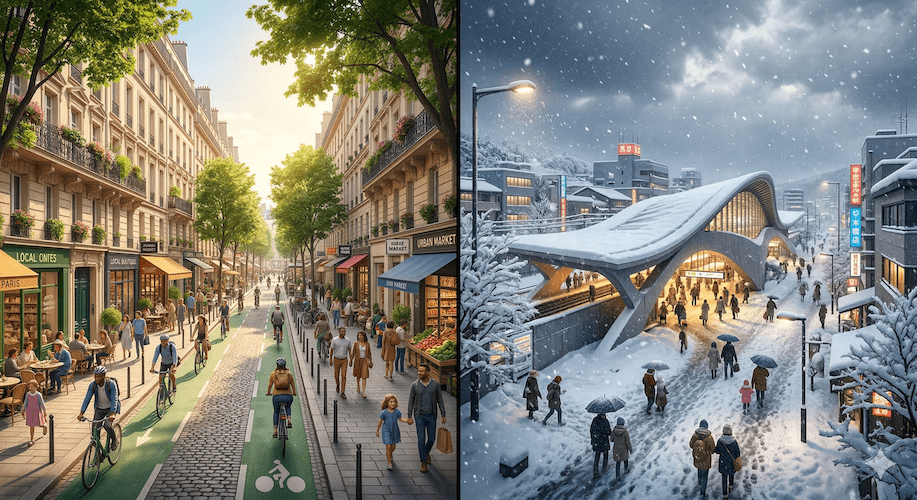
However, simply adapting vernacular architecture, which emphasizes coolness in Florida, is out of the question. In Hokkaido, a cold, snowy region, it is essential to formulate a completely new climate-adaptive code optimized for the local climate, including ensuring pedestrian space during the harsh winter (integrating snow removal routes and road heating), maximizing sunlight, and providing indoor and semi-indoor public spaces (a cold-climate version of a front porch) to prevent social isolation during the winter.
Another risk to be wary of is the risk of foreign-led gentrification, which is already evident in the neighboring Niseko area. To prevent a sudden rise in land prices from making it uninhabitable for young people and service industry workers, it is essential to incorporate zoning regulations from the early stages of development that reserve 20-30% units as affordable housing (low-cost public and community housing) as part of the package when designing a win-win circular structure.
5. Outlook for the future: Balancing "beauty" and "fairness"
Combining the 15-minute city with climate-smart code
Finally, predicting future macro trends, now that remote and hybrid work has become established following the pandemic of the 2020s, people's values are shifting to "avoiding commuting on crowded trains and moving to regional cities rich in nature where daily necessities can be accessed by foot or bicycle." Over the next few years, "new urbanism (15-minute city model)" in small regional cities with complete digital infrastructure, where work and home are located close to each other, will likely become the strongest solution for regional revitalization.
At the same time, learning from the serious climate disasters in Florida and Miami, mere "beautiful landscape design" will no longer be acceptable in future urban planning. There is no doubt that climate-adaptive codes that ensure "resilience to climate change," such as permeable pavement and the establishment of natural breakwaters, will become standard and mandatory as ordinances in each local government.
Conclusion: Design for spatial aesthetics and social equity
Overall, the Seaside Florida project dramatically demonstrates how abandoning car-first asphalt and designing human-scale pedestrian spaces can deliver strong economic value (huge tax revenue and increased land values) and environmental value.
However, the lesson we should truly learn from this case is the stark fact that leaving great urban space solely to the free competition of the market will inevitably lead to gentrification and the exclusion of local residents, who are the soul of the city.
When Toyako Town in Hokkaido and other regional Japanese cities refer to this model, the primary focus should not be on superficial design theory. It should be on how to ensure an inclusive system that allows local young people, seniors, and service industry workers to continue living in this beautiful, valuable town. The "beauty" of the space and the "fairness" of the social structure should be designed together from the early stages, such as by introducing "community land trusts (CLT)," which jointly hold land ownership within the local community and protect it from speculation. This is the core of next-generation urban development, which maximizes the ROI of invested resources and establishes a sustainable ecosystem.
Related Links
- Ministry of Land, Infrastructure, Transport and Tourism: Urban Development Promotion
- Congress for the New Urbanism
- Ministry of the Environment: Climate Change Adaptation Information Platform
Inquiries and requests
We help solve local issues.
Please feel free to contact us even if it is a small matter.