〜Understanding the turning point in sustainable urban policyく〜
*This article is based on survey data and related laws and regulations as of December 2025.
"An ounce of prevention is worth a pound of cure"
These words, left behind by Benjamin Franklin, one of the founding fathers of the United States, resonate with more weight than ever before in light of the greatest urban policy challenge facing modern Japan: the problem of vacant homes.
For many years, Japan's housing policy has focused on "eliminating quantitative shortages" and "promoting home ownership" against the backdrop of rapid economic growth. However, dramatic changes in the population structure and an oversupply of housing stock are bringing serious structural changes to the living environment in both urban and rural areas. Statistics from the Ministry of Internal Affairs and Communications reveal a stark reality. The number of "abandoned vacant homes" with no plans for renting or selling is increasing at an accelerating rate, and if this trend continues, it is predicted that by 2030, the number will account for approximately half of the total number of households in Tokyo.
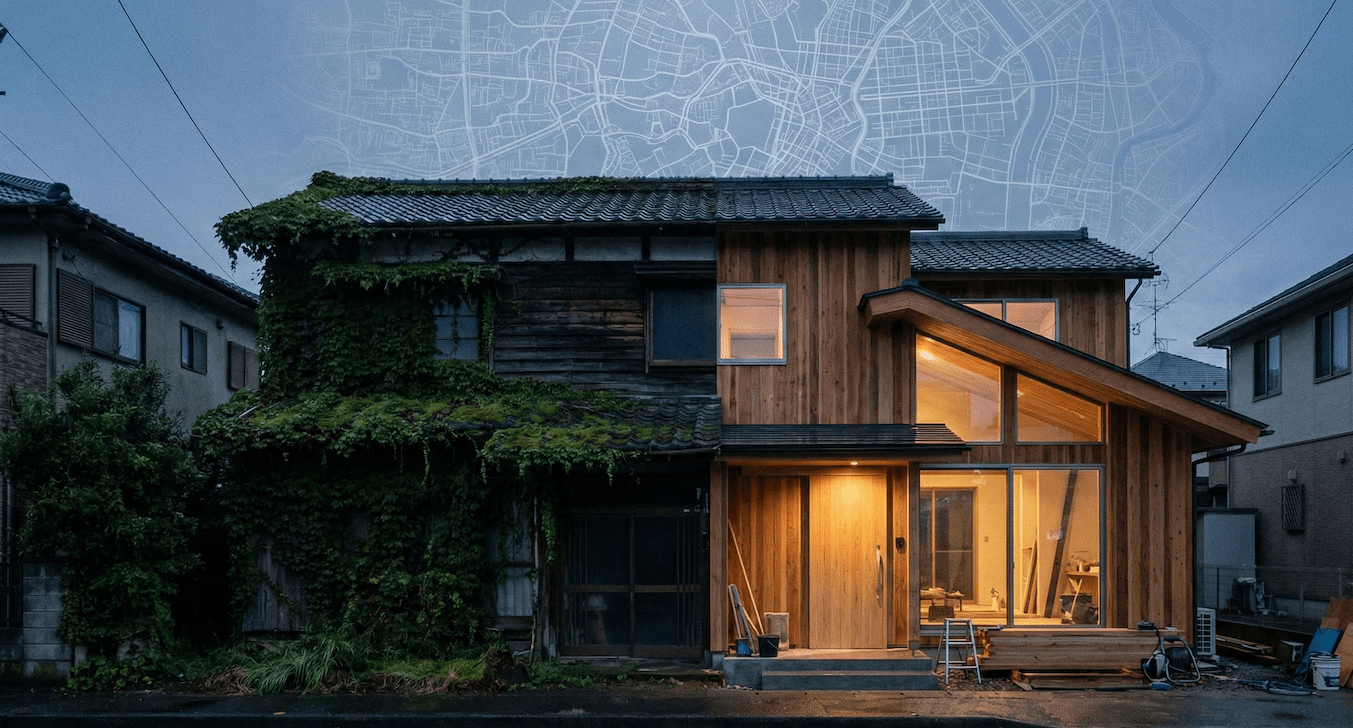
In response to this structural crisis, the government made a fundamental revision to the Act on Special Measures Concerning the Promotion of Measures for Vacant Houses, etc. (hereinafter referred to as the "Vacant Houses Act") in 2023 (Reiwa 5). This revision introduced a paradigm shift from the conventional "reactive approach" to a strong "prevention and management approach," and the system that was institutionalized to implement this was"Vacant House Management and Utilization Support Corporation"is.
Why is this system needed now? And what changes will it bring to the local communities in which we live? In this article, we will thoroughly explore its significance and overall picture, using quantitative data behind the establishment of the system, comparing it with models in Western countries, and presenting advanced examples from Hokkaido.
1. The 2030 Problem: The Structural Crisis of Housing Stock and Quantitative Reality
In order to accurately grasp the seriousness of the vacant house problem, it is necessary to assess the "quality" of the vacant houses, rather than just the total number. Vacant rooms for rent and properties currently being sold may eventually circulate within the market. However, what we should be truly afraid of are the vacant houses classified as "other vacant houses" in the statistics.Properties that have no intended use and have been completely removed from the marketThe existence of.
The accelerating trend of increasing "other vacant houses"
According to a detailed analysis by the Ministry of Land, Infrastructure, Transport and Tourism and Nomura Research Institute (NRI), the number of "other vacant homes" increased by approximately 1.9 times over the 20 years from 1998 to 2018. This is not simply a temporary phenomenon caused by economic fluctuations, but suggests a structural collapse of the supply and demand balance in a society with a declining population.
Even more shocking is the forecast data for 2030. If the current trend continues, it is estimated that the number of "other vacant homes" will reach approximately 4.7 million.
[Illustration] Forecast of the number of "other vacant houses (vacant houses with no intended use)"
*Created based on data from Nomura Research Institute and the Ministry of Internal Affairs and Communications
The figure of 4.7 million households is not merely a statistical figure. It means that an entire town somewhere in Japan could become a ghost town, not just in a localized area, but simultaneously across the country. The hollowing out of cities directly threatens our lives in the form of disaster prevention risks, a deterioration in public safety, and increased administrative costs.
Why market principles alone cannot solve the problem
From an economic perspective, homes that are not in demand should be demolished and the land reused. However, there have been three powerful brakes on this "metabolism" in Japan's housing market.
- 1. Rising demolition costs and lack of economic rationality Due to rising labor costs and waste disposal costs, demolishing a typical wooden house can cost hundreds of thousands of yen. In rural areas with low land prices, it is not uncommon for the demolition cost to exceed the sale price of the vacant lot, making demolition a pure loss for the owner.
- 2. Perverse incentives in the fixed asset tax system Due to the existence of the "Residential Land Special Exception" (explained later), a system has existed for a long time in which those who leave buildings on land can enjoy a maximum one-sixth reduction in property tax. This has created a perverse incentive for those who believe that "even if a house is dangerous, it is better to leave it as it is rather tax-deductible than demolish it."
- 3. Unknown Ownership and Decision-Making Stagnation The number of properties that are legally "untouchable" due to owners' aging, the progression of dementia, or incomplete inheritance registration is increasing dramatically. Properties with complicated ownership relationships are the type that private real estate agents are most reluctant to own, and are the main reason why they are abandoned by the market.
2. Redesigning the "carrot" and "stick" approach: the mechanism behind the revised Vacant Houses Act
The revised Vacant Houses Act, enacted in 2023 to overcome this situation, is designed to prevent problems by dramatically speeding up the timing of government intervention."Poorly maintained vacant house"This involves a review of the associated tax penalties.
Under the previous law, the government could not take strong measures until a house was deemed a "specified vacant house" and was in imminent danger of collapse, but the revised law allows for intervention at an earlier stage. This is like a shift in policy from "treatment of terminal cancer" to "prevention of lifestyle-related diseases" in the medical field.
| Comparison items | [Previous] Specific vacant houses | [After the revision] Poorly managed vacant houses |
|---|---|---|
| State definition | A state that poses a significant security risk, such as collapse. (The roof has already fallen or is leaning, etc.) | If left unattended, there is a risk that the property will become a designated vacant house. (broken window glass, overgrown weeds, parts of exterior walls peeling off, etc.) |
| Government intervention | Post-incident response and final measures (advice, guidance, recommendations, orders, subrogation) | Early intervention and prevention measures (Guidance and recommendations are possible) |
| Tax measures (fixed property tax) | Residential land special exemption lifted due to "recommendation" (tax burden increased by approximately 3 to 4 times, or up to 6 times) | Residential land special exemption lifted due to "recommendation" (Risk of tax increase occurs at an earlier stage) |
The powerful driver of special exceptions
What is particularly noteworthy is that the lifting of tax relief measures (effectively a tax increase), which previously could only be implemented when a building was on the verge of collapse, can now be applied at the stage of poor management, such as when windows are broken or weeds are overgrown.
This will clearly and urgently present the owner with the financial disadvantages of leaving the property unattended. For example, a property tax that was previously just 50,000 yen a year could suddenly jump to nearly 300,000 yen if a recommendation is made.
However, a serious problem arises here. Even if owners want to do something, who can they turn to if they live far away or lack the knowledge to do so? If the government wields the stick (tax increases) without the carrot (support) that shows a concrete path to a solution, owners will simply be driven into a corner, and as a result, abandonment (ownership becoming unknown) may increase.
The system that was established to act as that "carrot" and connect the government and owners was"Vacant House Management and Utilization Support Corporation"That's why.
3. Into areas beyond the reach of government: Functions and roles of support organizations
The system allows mayors of cities, towns, and villages to designate support corporations, which are NPOs, general incorporated associations, or private companies (real estate, construction, urban development companies, etc.) that are recognized as having specialized knowledge regarding the management and utilization of vacant houses. In other words, as a complement to the government, they are expected to demonstrate the mobility of the private sector, backed by a badge of trust.
As of the end of 2024, approximately 40 local governments across the country have already made this designation, and their roles can be summarized as follows:
The first step in dealing with vacant houses is to identify the owners, but this is much more difficult than you might imagine. This is because there are many cases where the owners do not live at the address listed on the land registry, or where inheritance has not been registered.
Support organizations are commissioned by the government to carry out on-site surveys to locate owners, conduct questionnaire surveys of owners, hold awareness-raising seminars, etc. This practical proxy function is an essential piece of infrastructure, especially for small and medium-sized municipalities that lack the manpower of administrative staff.
Many of the problems with vacant houses are not simply due to the deterioration of the buildings, but are caused by "tangled human relationships and rights" such as inheritance disputes between siblings, incomplete boundary determinations, and the disposal of left-behind items.
Due to the principle of "non-intervention in civil matters," the government is reluctant to intervene in the circumstances of individual families or to refer specific businesses. Support organizations utilize their flexibility as private organizations to work with judicial scriveners, land and house surveyors, demolition companies, and real estate agents to provide solutions (one-stop services) that address the concerns of property owners.
International Comparison: Why did Japan choose the "Support Corporation" model?
To understand the uniqueness of Japan's approach, let's compare it with the preceding Western models for dealing with vacant houses, particularly the US "land bank" and the UK "council tax," which are based on different philosophies.
| Comparison items | United States (land bank) | Japan (support organization) |
|---|---|---|
| Philosophy of approach | "Owned" by a public institution Property with delinquent taxes is seized, taken legally into possession by a public institution, and then sold or demolished after the title is cleared. | "Maintain" private ownership This is a "public-private partnership/guided model" in which ownership remains private, while management and distribution are supported by corporations. |
| Financial risks | High (large public burden) In cases like Detroit, the huge inventory management costs (such as mowing and security) are putting a strain on the city's finances, and unless an exit is found, the deficit will continue. | Low (expecting private sector self-operation) The government only pays the commission fee and does not bear the inventory risk of the property, and sustainability is left to the private business model. |
| Strength of coercive force | Extremely strong (close to forced expropriation, using hard power) | Moderate (emphasis on soft power, focusing on supporting owners' decision-making) |
American-style land banks have strong authority, but require enormous amounts of public funding. Japan's local governments, struggling financially, no longer have the financial resources to purchase and maintain large numbers of vacant homes. Therefore, the "support corporation model," which seeks to resolve the issue by encouraging private sector vitality while giving maximum consideration to the private right of ownership, is a realistic and difficult choice that represents the optimal solution given Japan's legal system and financial circumstances.
Furthermore, compared to the UK's "Council Tax" (a punitive tax of up to four times the amount on vacant houses), Japan's tax not only threatens tax increases but also includes the assistance of support organizations, showing that it places more emphasis on a careful process.
4. Report from the field: Advanced initiatives in Hokkaido
The success of the system will depend not on armchair theory, but on its implementation on the ground. Hokkaido in particular has seen the start of support organizations working to address a variety of local issues and the introduction of new technologies, and is attracting attention as a model case for the future.
Taiki Town: Building a one-stop service center through public-private collaboration
In Taiki Town, Hokkaido, where the population is declining, the Taiki Town Development Lab General Incorporated Association was designated as a support organization in April 2024 and began active activities. Here, the "hub function" that transcends the boundaries between the government and private sector plays an important role.
- ● Complementing the government and ensuring its reliability The support organization takes on all consultations from owners of vacant houses that the government alone cannot handle. Backed by the "badge of trust" of being introduced by the town hall, the organization lowers the psychological hurdles for owners and provides support by accompanying them through the concrete steps of sorting out rights, demolishing the property, and selling the property.
Liquidating "negative assets" through technology
In Hokkaido, there is also an accelerating movement to use technology to rescue properties with low market value. For example, in 2025, Matsumae Town will launch a nationwide "distressed property" purchasing company,Albalink Co., Ltd.We have signed a cooperation agreement with
By utilizing the platform of a tech company with a nationwide network of investors, the company is attempting to tap into new demand for low-priced properties that local real estate agents are reluctant to handle, or properties with complicated legal rights. This "digital market supplementation" is an important solution model that many depopulated areas, including Taiki, should follow.
Niseko and Toyako Area: Complementing Ordinances and Private Sector Vitality
Meanwhile, the international resort towns of Niseko and Toyako have their own ordinances requiring owners to appoint a manager (and enter into a contract with a management company) in order to maintain the landscape and prevent snow damage.
The private property management market is already mature in this region, but support organizations are expected to play a role as a safety net for properties that fall through the cracks of this "market mesh" and for complex cases that private companies find difficult to handle. The key to operating the system is to optimize the division of roles between the government, private sector, and support organizations in line with the maturity of the local market.
Conclusion: Towards building a sustainable "ecosystem"
The Vacant House Management and Utilization Support Corporation System is not simply a system to create a subcontracting organization for the government. It is a uniquely Japanese "social infrastructure" that combines the enforcement power of the government (tax system and legal regulations) with the flexibility of the private sector (business and negotiation power) to tackle the urban crisis of 2030.
However, challenges remain. The biggest concern is the profitability and sustainability of the support organization. It will be difficult to maintain the organization with just a low management fee (several thousand yen per month). It will be essential to adopt a "hybrid management" approach, such as becoming a regional hub like Taiki Town, or collaborating with tech companies to secure new revenue sources, as in the case of advanced examples in Hokkaido.
"It is people, not buildings, that make a city."
Borrowing this insight from Jane Jacobs, the mother of urban theory, the essence of vacant house measures is not simply about disposing of the "boxes" that are buildings, but rather the process of bringing "human activity" back into those places. Can support organizations function as a catalyst to bring new life into the local community? There is only a short time left until the 2030 problem, but it is no exaggeration to say that the success or failure of this will determine Japan's future.
Related Links
- Ministry of Land, Infrastructure, Transport and Tourism: Information related to the Special Measures Act on the Promotion of Measures against Vacant Houses, etc.
- Statistics Bureau, Ministry of Internal Affairs and Communications: 2023 Housing and Land Statistics Survey
- Nomura Research Institute: Housing Market and Challenges in 2040
Inquiries and requests
We help solve local issues.
Please feel free to contact us even if it is a small matter.